
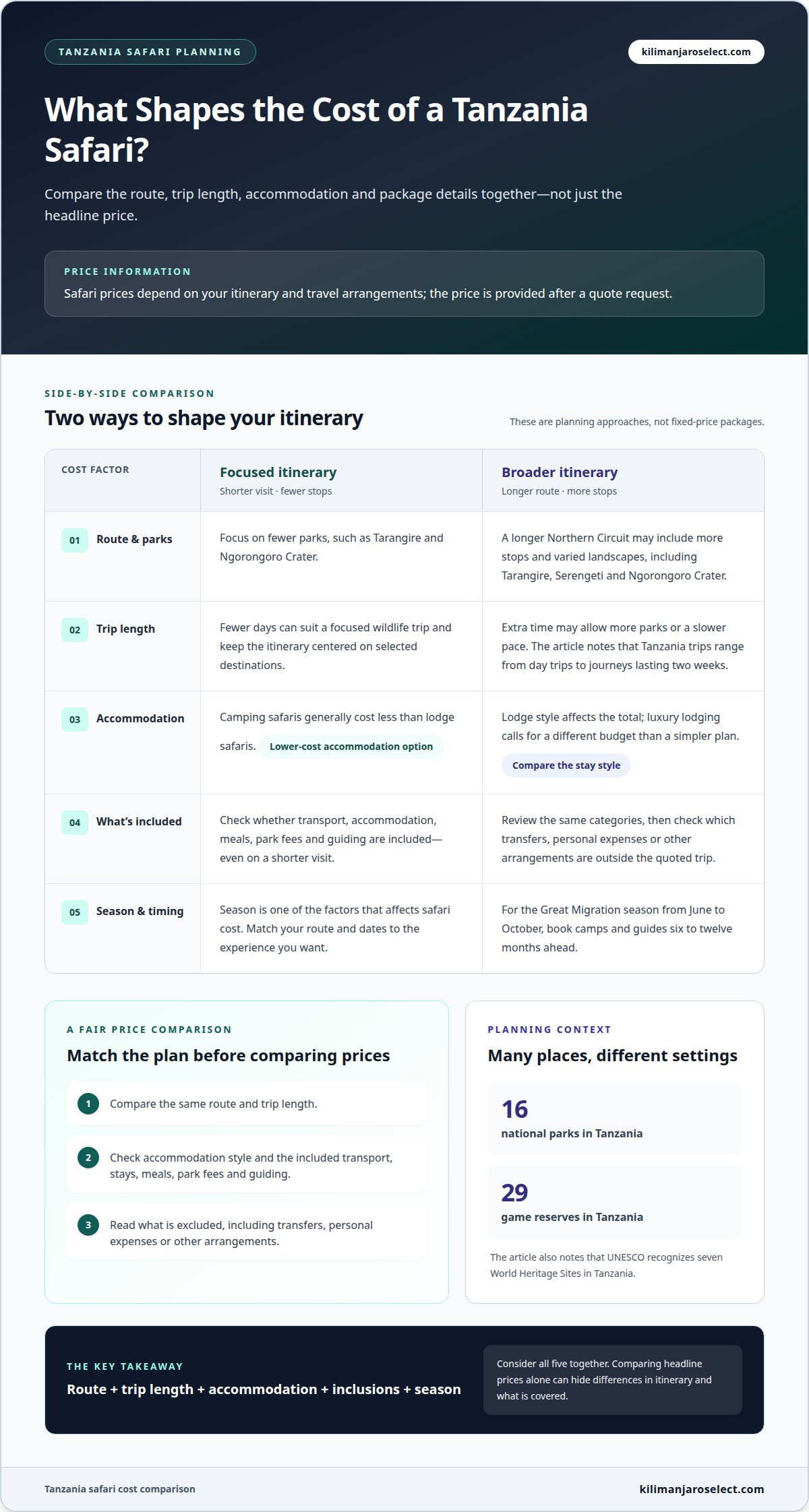
The length of your safari shapes more than the calendar. Tanzania safari packages vary in cost according to route, trip length, accommodation style, and travel arrangements. The price is provided after a quote request. Fewer days can suit a focused wildlife trip, while extra time may allow you to visit more parks or travel at a slower pace.
It’s natural to weigh your budget against the wildlife experiences you hope to have and the time you can spend travelling. This guide explains how to compare safari costs, migration routes, Zanzibar combinations, and trip lengths so you can choose the journey that best fits your plans.
From a brief visit to a longer northern circuit, the route and number of days shape your safari. Use the practical comparisons below to weigh your options and decide whether to include a beach stay.
Key Takeaways
- Compare safari costs by looking at route, accommodation style and trip length together, especially when weighing visits to Ngorongoro Crater and the northern circuit parks.
- For a migration-focused trip, plan your Serengeti route around the wildlife movement and allow enough time in the park.
- Pairing a wildlife safari with Zanzibar adds a beach stay to the itinerary, so balance time on the mainland with time by the coast.
- Choose a trip length that fits your priorities, from a focused Tarangire and Ngorongoro Crater safari to a longer journey across several parks.
How much does a Tanzania safari cost?
Safari costs depend on the route, trip length, accommodation, transport, park fees, and season. Your itinerary also determines how much time you spend among northern Tanzania’s distinctive landscapes.
Northern Circuit Parks and Routes
The Northern Circuit links destinations such as Tarangire National Park, Serengeti National Park, and Ngorongoro Crater. A shorter safari can focus on fewer parks, while a longer route may include more stops and varied landscapes. The price depends on your itinerary and travel arrangements, and is provided after a quote request. For the finest camps and guides, book six to twelve months ahead, especially during the Great Migration season from June to October.
National Parks and Reserves
Tanzania has 16 national parks and 29 game reserves, offering different settings for a safari. Ngorongoro Crater is an iconic stop on northern routes, while Serengeti and Tarangire bring different landscapes to the same circuit. UNESCO recognizes seven World Heritage Sites in Tanzania. Visa requirements depend on your passport and travel purpose; vaccination guidance depends on your travel history and health circumstances. Include entry documents and health preparations in your trip planning.
Package Inclusions and Exclusions
Compare itineraries by checking whether transport, accommodation, meals, park fees, and guiding are included. The package description should clarify which transfers, personal expenses, or other arrangements are outside the quoted trip. Camping safaris generally cost less than lodge safaris, so accommodation style affects the total. For a useful comparison, match the route and trip length, then review the inclusions rather than comparing headline prices alone. A shorter visit to Tarangire and Ngorongoro Crater offers a different scope from a multi-park northern circuit.
Serengeti wildebeest migration safaris
The Great Migration brings well over a million wildebeest and zebra across the Serengeti plains. Because the herds move, timing your route matters more than choosing a famous destination by name alone.
Great Migration Itineraries
Build a Serengeti itinerary around the migration stage you most want to see, such as calving season or large herd movements. The animals’ locations change, so a fixed itinerary may not suit every travel date. Allow enough time to focus on relevant areas rather than rushing between distant parks. Booking camps and guides six to twelve months ahead can help with planning during the June-to-October Great Migration season.
Wildebeest Migration Viewing
Great Migration viewing depends on where the herds are moving during your visit, not simply on reaching the Serengeti. Prioritize time in areas suited to your travel dates, with room for game drives and changing wildlife sightings. The spectacle includes wildebeest and zebra, and you may also encounter elephants. Patience and flexible daily plans help you make the most of your time in the park.
Calving season offers a different focus from following large herds across the plains. Decide which part of the migration matters most, then shape the route around that priority. Because animal movements vary, a migration-focused safari benefits from time in the Serengeti rather than brief stops across several destinations. The right balance depends on your available days and whether you prefer wildlife photography, close observation, or a broader northern Tanzania adventure.
Keep your purpose in mind when comparing routes. A Serengeti migration safari focuses on wildlife movements and conservation landscapes, while a Kilimanjaro trek or Zanzibar beach stay offers a different experience. Cultural visits add another perspective to a Tanzania trip but require time beyond game viewing. Choose your migration priorities first, then decide whether other destinations belong in the itinerary.
Safari and Zanzibar beach combinations
Combining wildlife viewing in northern Tanzania with Zanzibar’s coast creates two distinct parts of one trip: mainland game drives and time by the Indian Ocean. First decide how much of your available time to give each experience. A shorter extension keeps the safari central, while a longer itinerary leaves more room for beaches, cultural sights, or both.
Sample itineraries range from 11 to 18 days, showing how differently travellers can balance mainland parks and an island stay. For example, Tarangire and Serengeti bring savannah landscapes and wildlife, while Zanzibar offers a change of pace after days focused on animals. A Great Migration trip gives the mainland portion a specific wildlife focus, but the herds’ movement makes route planning important.
Zanzibar adds local history and cultural sights to a beach-focused stay. Decide whether you want to explore the island’s heritage, unwind on its beaches, or divide your time between both. Then shape the safari route around that choice. A northern circuit including Tarangire or Serengeti may suit travellers seeking iconic wildlife, while a broader trip can allow more time across the country.
Compare combinations by looking beyond the number of days. Check how much time is set aside for game drives, transfers between destinations, and the island stay. Accommodation style, route, and trip length all affect the overall cost. Luxury lodging and a longer itinerary usually call for a different budget than a simpler, shorter plan. The package description should clarify which transport and stays are included and which personal expenses are paid separately.
For a balanced Africa journey, choose the experience you most want to remember, then give it enough space in the itinerary. If seeing wildebeest is your priority, plan the safari around the migration before adding Zanzibar. If the coast matters most, protect time for beach days instead of filling every day with mainland travel.
Safari durations from day trips to multi-day tours
Tanzania safari options range from day trips to journeys lasting two weeks. Day trips suit travellers with limited time near northern Tanzania’s parks, while multi-day tours allow more wildlife viewing across several destinations. Most travellers spend between six and ten days on safari. The right duration depends on your priorities: a particular destination, more time on game drives, or a broader circuit.
A focused trip can cover Tarangire and Ngorongoro Crater in two days. A four-day route can add the Serengeti, while a six-day itinerary can include Lake Eyasi alongside Tarangire, Serengeti, and Ngorongoro Crater. These examples show how extra days make room for another destination without turning every stop into a quick visit.
Tarangire National Park is a practical focus for a shorter safari. Lake Manyara can also feature in northern Tanzania plans, while the Serengeti suits travellers seeking more time for wildlife viewing across a wider circuit. Driving time affects how much of each day remains for exploring, so consider the time between parks alongside the total trip length.
For a short schedule, choose one or two priority parks and focus your game drives there. With six to ten days, you can combine destinations at a steadier pace. A two-week journey offers still more time to travel between parks. Compare itineraries by counting actual safari days, noting transfers between parks, and checking which stops matter most to you.
Choose your trip length according to the experience you want, rather than adding parks simply to fill the itinerary. Set your preferred duration and route, then explore the safari options that fit your plans.
Kilimanjaro Select
Kilimanjaro Select helps you shape a Tanzanian journey around your available time, preferred route, and wildlife interests. If you’re comparing safari durations, options include a two-day Tarangire and Ngorongoro Crater safari, a four-day route that adds the Serengeti, and a six-day itinerary that also visits Lake Eyasi. Each offers a different balance of time in the parks and travel.
If you’re combining wildlife viewing with a mountain trek, Kilimanjaro Select offers the six-day Marangu Route, seven-day Machame Route, and eight-day Lemosho Route. Consider which experience matters most and how much time you can set aside, then use those priorities to plan a cohesive trip.
Contact Kilimanjaro Select to discuss the journey you have in mind.
Shape a safari around what matters most
Turn your travel hopes into a clear starting point. Decide what you want the journey to feel like, from quiet time in the bush to a full schedule of wildlife viewing, then choose a pace that lets you enjoy it. This gives your itinerary a purpose instead of simply adding destinations.
Use that priority to guide your conversation about Tanzania safari packages. Share your preferred travel dates, the experiences you value most, and how much time you can set aside. A thoughtful plan can then bring the route and pace in line with your wishes, whether you’re focused on wildlife, the coast, or a broader Tanzanian adventure.
Kilimanjaro Select can help you explore the available options and shape a journey that feels personal and well considered. Contact Kilimanjaro Select to begin discussing your plans. Your Tanzanian adventure can start with one clear idea and grow from there.
Frequently Asked Questions
How safe is Tanzania for tourists?
Tanzania travel safety depends on your plans and everyday precautions. On a guided safari, follow your guide’s instructions, remain inside the vehicle unless invited to exit, and respect park rules around wildlife. Keep valuables secure and plan transfers as part of your itinerary. These habits help you travel attentively through cities, parks, and other destinations across the country.
When is the best time to visit Tanzania?
The best time to visit depends on your interests. June to October is Tanzania’s dry season and is recommended for clear wildlife viewing. November to March brings greener scenery and birding opportunities. For a migration-focused visit, choose dates with herd movements in mind. Coast plans may suit a different season, so consider both mainland and island activities when setting your dates.
Are these trips ready to book?
Yes, Kilimanjaro Select offers safari and trekking itineraries for booking. Start by settling on your travel dates, preferred trip length, and main interest, such as wildlife viewing or a Kilimanjaro trek. Then choose an itinerary that fits those priorities. Planning the route, accommodation arrangements, and travel days together from the outset makes it easier to organize the trip.
How do I select a reliable Tanzanian tour operator?
Choose an operator whose listed itineraries match the experience you want and clearly explain the route and trip length. Kilimanjaro Select offers Tanzania safari bookings with locally rooted, personalized service. Select an itinerary that reflects your priorities, whether you want time for wildlife viewing, a cultural experience, or a trek on Mount Kilimanjaro.
How is the wildlife viewing in Tanzania?
Tanzania offers varied wildlife viewing across its parks and conservation areas. Ngorongoro Crater and Serengeti National Park are home to all five Big Five animals, while the Great Migration brings well over a million wildebeest and zebra across the Serengeti plains. Sightings vary with animal movements and location, so a route focused on your preferred wildlife can shape the experience.
How much do Tanzania safari packages cost per person?
The per-person cost depends on the route, trip length, accommodation style, transport, and itinerary inclusions. A safari focused on fewer destinations costs differently from a longer circuit with more park visits. Tanzania safari packages are priced according to these choices, so compare both the routes and what each itinerary includes. The price of your selected trip is provided after a quote request.


