
The trek is only one part of your Kilimanjaro budget. Kilimanjaro trek cost depends on the route, duration, group arrangements and package inclusions. Your full trip budget also needs to cover any accommodation before or after the climb, travel to Tanzania, gear, tips and personal spending. Request a quote to see the price for your chosen itinerary.
It’s easy to focus on the climb and overlook the nights around it, especially when planning time to rest before or after the summit. Factoring in these additional expenses helps you choose a route and travel arrangements that fit your plans. This guide covers the main factors that shape trek prices, how Marangu’s hut accommodation can affect your budget, and what to allow for lodging and other pre- and post-trek costs. You’ll get a fuller picture of the journey’s expenses, not just the days on the mountain.
Key Takeaways
- Separate the climb price from the full trip budget by accounting for travel, lodging, equipment, insurance and tips.
- Compare routes by duration and what each arrangement includes, not by the headline price alone.
- Factor in Marangu’s hut accommodation when weighing its budget and comfort trade-offs against camping routes.
- Plan arrival and departure nights in Moshi or Arusha so your accommodation budget covers time beyond the trek.
What is the Kilimanjaro hike price?
There isn’t one fixed price for climbing Kilimanjaro: route, trek length, group arrangement and package inclusions all shape the quote. Mount Kilimanjaro is 5,895 metres high, according to Tanzania National Parks Authority, so planning also means understanding the services and national park charges behind the climb.
Prices by Route and Trek Length
Machame, Lemosho and Marangu follow different itineraries, and the number of trekking days affects the services involved. A longer itinerary means more time on the mountain and may change crew, food and park-related costs. Compare each route’s daily plan and package inclusions, not just its headline price. The best fit balances your preferred pace, acclimatisation needs and comfort.
Group and Solo Pricing
A per-person quote can vary with group size because guides, porters and other crew support are arranged around the climbers. In a group, shared operating costs may be divided among participants; a solo traveller may carry a larger share. Ask for a clear breakdown of how the group arrangement affects your quote and which services are included.
Check the main cost components, including park charges and trek crew wages. Packages can differ in their inclusions, so compare the written details for crew support, meals, transport and accommodation rather than assuming every itinerary covers the same services. A lower headline price may include fewer arrangements. An itemised quote helps you identify what is covered and what to budget for separately.
If you are a Tanzanian resident, include your residency status when requesting a quote. Any resident discount should be clearly explained, including its eligibility basis and the park charges it covers. This helps you distinguish a genuine reduction from a package with different inclusions.
Your final Kilimanjaro trek cost depends on the route, trek length, group size, services and applicable charges. Request a quote for your chosen arrangements and review how these factors appear in the breakdown.
How Much Does it Cost to Climb Kilimanjaro?
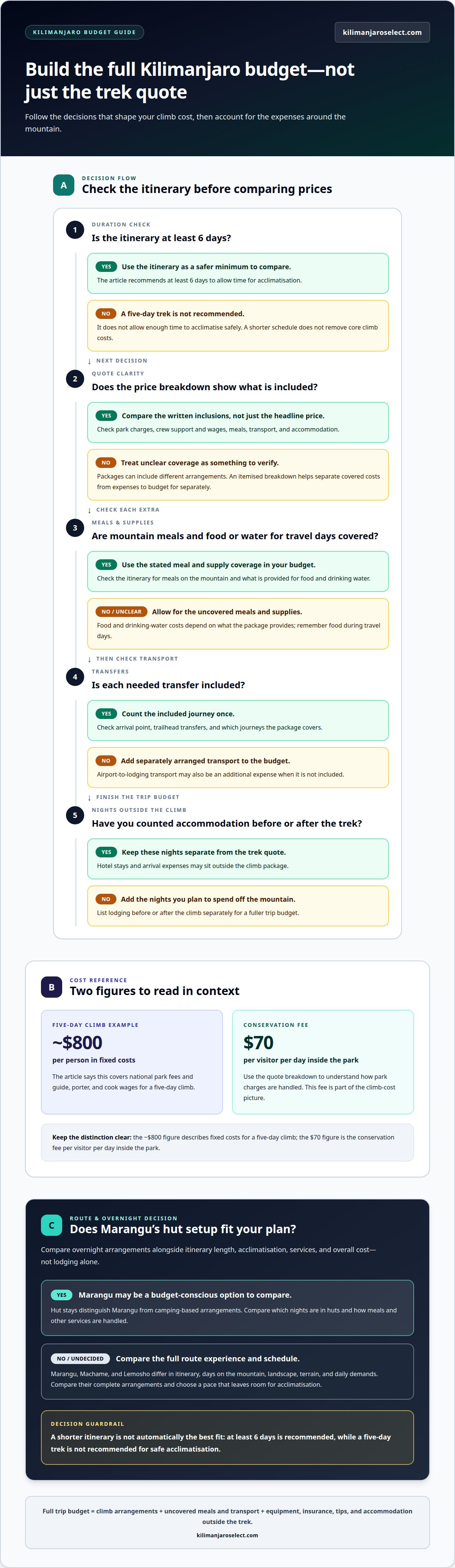
Your total budget includes the climb and separate expenses for gear, insurance, tips, meals, transport and accommodation. The lowest-cost safer approach is to choose an itinerary of at least 6 days. A five-day trek isn’t recommended because it doesn’t allow enough time to acclimatise safely.
Fixed Climb Costs
For a five-day climb, fixed costs are around $800 per person, covering national park fees and guide, porter and cook wages. The conservation fee is $70 per visitor per day inside the park. These costs remain important parts of a climb budget, so compare package breakdowns to see how park charges and crew wages are handled. A shorter itinerary doesn’t remove these core expenses.
Equipment, Insurance, and Tips
Keep these expenses separate from the trek quote, especially if you already own suitable equipment.
Food, Water, and Transport Costs
Food and drinking water costs depend on which meals and supplies the package provides. Check the itinerary for meals on the mountain, then budget for food during travel days. Transport costs depend on your arrival point, trailhead transfers and which journeys are included. A separately arranged transfer adds to your budget, while a transfer included in the package should not be counted twice.
Accommodation and Trek Budget Levels
Comfort level and location affect other lodging costs. Budget and mid-range packages can differ in accommodation, transport, meals and equipment arrangements, so compare the actual inclusions rather than the category label. List any nights outside the trek separately. For help considering route options alongside these arrangements, explore the Kilimanjaro trek arrangements.
Marangu Route budget option and hut accommodation
Marangu’s hut accommodation makes it a distinct choice among Kilimanjaro routes. Compare its overnight setup and trek duration alongside the overall cost, since a shorter itinerary is not automatically the best fit for acclimatisation.
Marangu Huts as a Budget Option
Marangu is often considered a budget-conscious route, and its hut stays distinguish it from camping-based arrangements. Compare which nights are spent in huts and how meals and other services are handled. A six-day Marangu itinerary gives you a longer schedule to weigh against a shorter climb, rather than judging the route by lodging alone.
Duration matters for the body as well as the budget. At least 6 days is recommended for a Kilimanjaro climb, while a five-day trek isn’t recommended because it allows too little time to acclimatise safely. The altitude makes a gradual itinerary a meaningful consideration; choose a route and pace that give acclimatisation adequate room.
Route and Duration Cost Factors
Route choice affects the itinerary, the number of days on the mountain and the services needed each day. More days mean more time for crew support, food and park-related arrangements. Compare the full itineraries and inclusions for Marangu, Machame and Lemosho, then consider how each route’s duration affects your overall budget.
Scenery and difficulty shape the experience as well as the price. Routes differ in landscape, terrain and daily demands, so choose based on the trekking experience you prefer and how steadily you want to approach the summit. Consider cost alongside these trade-offs, rather than treating it as the only measure of value.
Plan for the journey beyond the trail, too. Your arrival airport, ground transport and route to your accommodation can add expenses if transfers are not included in your arrangements. Include airport-to-lodging transport in your Tanzania budget where needed. The total cost reflects both the mountain schedule and the practical logistics around it.
Accommodation and pre- and post-trek expenses
A realistic Tanzania budget accounts for accommodation as well as nights on Mount Kilimanjaro. Hotel stays, airport transfers and arrival expenses may sit outside the trek quote, so list them separately when planning your trip. This gives you a clearer view of the full budget, not just the days spent trekking.
Allow for hotel nights before and after the climb. Distinguish any accommodation included with the trek from nights you arrange separately. This prevents counting package lodging twice or overlooking a night required by your travel schedule.
Arrival timing shapes your lodging plan. If your flight reaches Tanzania before the trek begins, include the night before departure; if you stay after returning from the mountain, budget that night separately. For an 8-day Lemosho itinerary, map your travel dates against the trek dates, then count only the nights outside the provided accommodation. This simple booking step gives you a clearer total without assuming every hotel night is included.
Visa costs are another pre-trek expense. Add the relevant amount to your travel budget, along with transfers between the airport, accommodation and trek meeting point. Transfer costs depend on the journey and arrangements, so list them separately from lodging rather than assuming they are included in the package.
Mount Kilimanjaro can be part of a wider Africa itinerary, but extra nights or onward travel bring separate accommodation and transport costs. A national park itinerary or its success rate does not determine your hotel bill; location, comfort and the number of nights you stay do. Create a simple trip budget with separate lines for trek nights, other accommodation, visa and transport. This makes the full cost easier to understand before booking.
For a practical budget, first identify which accommodation nights the trek includes. Then count your remaining nights and add the relevant visa and transfer expenses. This keeps the climb and surrounding travel costs clear.
Kilimanjaro Select
Kilimanjaro Select helps you connect your budget priorities with a Kilimanjaro itinerary. If you’re weighing route length, accommodation style and the services included, its trek options give you clear routes to consider: 7 Days Machame Route Kilimanjaro Treks, 8 Days Lemosho Route Kilimanjaro Treks and 6 Days Marangu Route Kilimanjaro Treks.
When discussing a quote, share your preferred route, travel timing and the arrangements you want included. These details help show how the itinerary fits your plans and which expenses fall outside the trek. To discuss your Kilimanjaro plans, contact Kilimanjaro Select.
Shape Your Climb Around the Journey You Want
Choose the mountain experience that feels right, then plan the wider Tanzania itinerary around it. Kilimanjaro trek cost depends on your chosen route, trek duration, group arrangements and included services. Your quote reflects those choices and the arrangements for your trip.
Kilimanjaro Select offers 7 Days Machame Route Kilimanjaro Treks, 8 Days Lemosho Route Kilimanjaro Treks and 6 Days Marangu Route Kilimanjaro Treks. Consider which itinerary best suits your preferred pace and accommodation style, then decide how much time you want to set aside for arrival, rest and onward travel. A thoughtful plan gives you a clearer starting point for preparing without losing sight of the adventure ahead.
For help putting your preferred route and travel plans together, contact Kilimanjaro Select. Your climb can begin with a clear plan and the excitement of the mountain ahead.
Frequently Asked Questions
How much does a Kilimanjaro trek cost in 2026?
Your Kilimanjaro trek cost in 2026 depends on route, itinerary length, group size and package inclusions. Build your budget by separating the trek quote from travel to Tanzania, extra lodging, gear, insurance and tips. Then compare itineraries with the same inclusions. This gives you a useful like-for-like view instead of relying on a headline figure that may cover different arrangements.
What is included in a Kilimanjaro trek package price?
Package inclusions vary, so read the itinerary alongside its cost breakdown. Look for details about park charges, mountain accommodation, crew support, meals and transport to the trailhead. For example, a package may include mountain accommodation while lodging on your arrival night remains a separate expense. Identify what is covered before budgeting for costs outside the trek.
How much are Kilimanjaro National Park fees and permits?
Kilimanjaro National Park fees can account for $800 to $1,200 of a climb’s total price. The conservation fee is $70 per visitor per day inside the park. These figures describe park-related costs, not a separate operator’s package price. Ask for a breakdown that shows which park charges are included, so you can understand the total without counting the same fee twice.
How much should you budget for guides, porters, and tips on Kilimanjaro?
A seven-day climb tip is typically $200 to $300 per trekker. Treat tips as a separate budget line from the trek quote, and account for the itinerary length and group arrangement. That distinction helps you plan for crew costs without confusing wages with gratuities.
How do Kilimanjaro trek prices compare by route and number of days?
Route and duration affect how many days require crew, meals and park arrangements, so compare complete itineraries. A six-day Marangu trek, a seven-day Machame trek and an eight-day Lemosho trek have different schedules and accommodation styles. Compare the daily plan and inclusions, not just the route name. A longer itinerary adds support days to consider in your budget.
What is the price difference between budget, mid-range, and luxury Kilimanjaro climbs?
There is no single standard price difference between budget, mid-range and luxury climbs because these labels can describe different inclusions. Compare the accommodation, transport, equipment arrangements, meals and crew support listed for each itinerary. Choose the comfort and services you value, then compare itemised packages with similar routes and durations. This makes it easier to identify which differences matter for your plans.


