
A Marangu Route 6 day trek can be an option for beginner climbers who prepare for several hours of walking each day and a much longer summit push. Plan to hike around 4-6 hours on regular trekking days, with a 12-14-hour hike on summit day. The itinerary also includes an acclimatization day at Horombo Hut before the climb continues toward Kibo Hut.
It’s natural to wonder whether your current fitness is enough, especially when the summit attempt begins in darkness and reaches high altitude. You don’t need to be an elite athlete, but steady preparation and a willingness to walk at a measured pace matter.
This guide explains the fitness the route calls for, what overnight stays in mountain huts are like, and how the summit approach unfolds from Gilman’s Point at 5,681 m to Uhuru Peak at 5,895 m. You’ll get a clearer picture of the days ahead and what to expect from this welcoming, well-travelled route.
Key Takeaways
- Build steady walking fitness for consecutive trekking days, and understand why altitude acclimatization matters as much as stamina.
- Know what to expect from overnight stops in Mandara, Horombo, and Kibo huts before setting out.
- Follow the summit-day stages from Kibo Hut to Gilman’s Point and onward to Uhuru Peak, then prepare for the descent.
- See how the route’s daily distances, elevation gains, and final long walk shape its overall difficulty for first-time climbers.
Is the 6 Days Marangu Route Suitable for Beginners?
Beginners can consider this six-day Kilimanjaro itinerary if they prepare for consecutive hiking days and high altitude. Its pace includes an acclimatization day before the summit approach, but the climb still calls for consistent preparation.
Six-Day Itinerary and Walking Distances
From Marangu Gate, the first day covers about 8.3 kilometres to Mandara Hut, with a climb of 818 metres. The next stage reaches Horombo Hut at 3,720 metres, then day three allows an acclimatization hike toward Zebra Rocks. Afterward, the route continues across the saddle to Kibo Hut, listed at 4,700 metres, before the summit attempt and descent.
Six-Day and Five-Day Itinerary Comparison
The six-day schedule includes a dedicated acclimatization day at Horombo Hut. A five-day schedule has less time for this gradual adjustment, so compare the itinerary’s rest and hiking stages, not only its total days. For beginners, that extra day can be an important part of the plan, though it doesn’t remove the physical challenge of climbing above 5,000 metres.
Fitness should support steady walking for several hours, rather than speed or technical climbing. Practise on hilly trails and build up to consecutive walking days. The descent also requires stamina: the final walk from Horombo Hut to Marangu Gate covers about 20 kilometres.
Season affects trail conditions. June to October is the recommended hiking period, while the main rainy season runs from the end of March to the beginning of June. Conditions change as the route climbs. Nights at high-altitude Kibo Hut can be very cold, so pack warm layers.
An eight-day travel plan can combine the six trekking days with two hotel nights around the climb. On the mountain, you stay in huts at Mandara, Horombo, and Kibo, rather than tents. The route also passes Maundi Crater near Mandara Hut, where you can take a short side visit.
According to Tanzania Revenue Authority, Tanzania’s VAT is 18%. Include applicable taxes when reviewing the overall trip arrangements.
Summit attempt via Gilman's Point to Uhuru Peak
Summit night starts at Kibo Hut, with the climb continuing past Gilman’s Point to Uhuru Peak. Kilimanjaro’s national park authorities set the minimum climbing age at 10 years; trekkers follow park requirements and their guide’s instructions.
Uhuru Peak Ascent and Descent
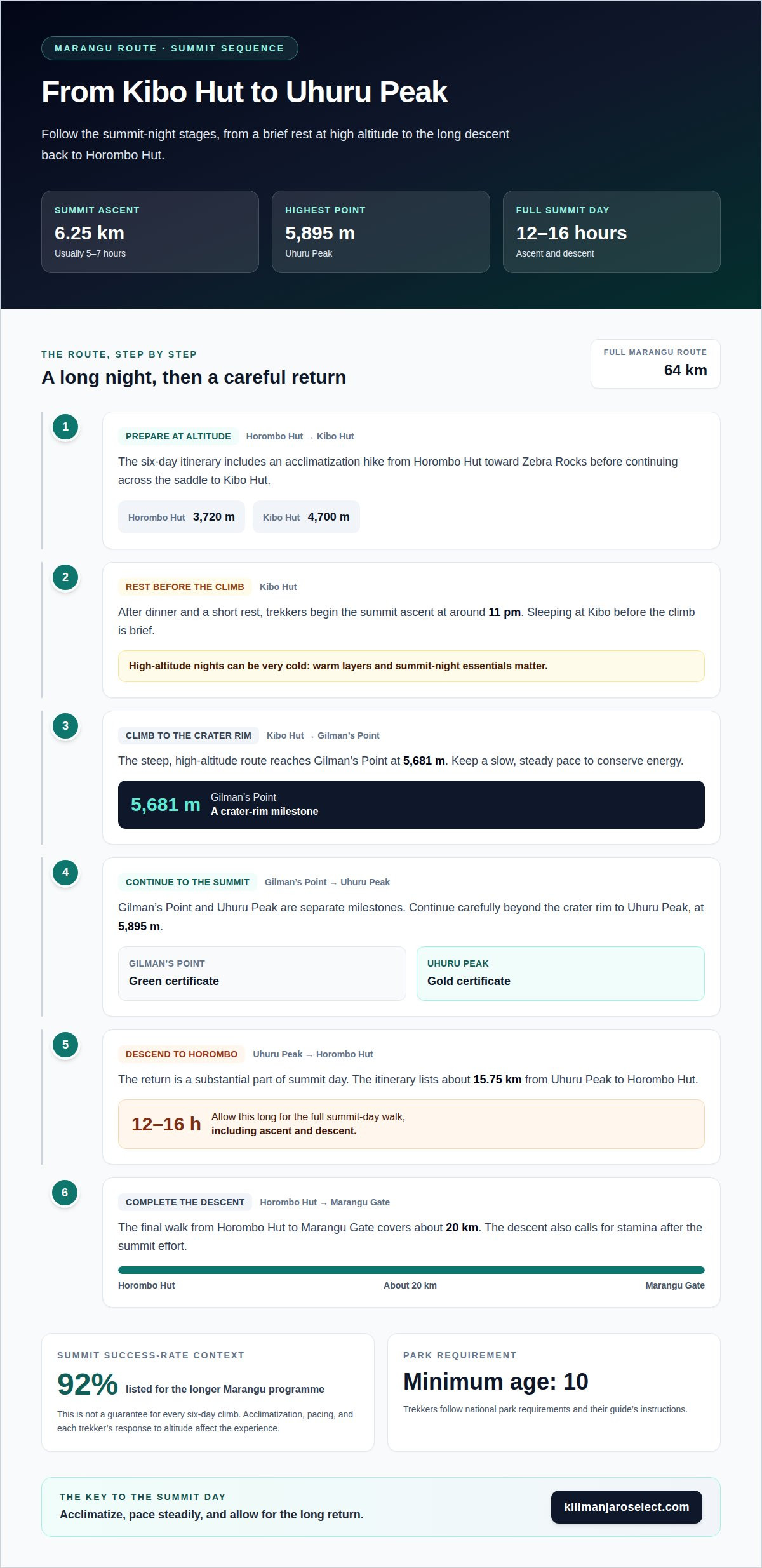
After dinner and a short rest at Kibo Hut, trekkers begin the summit ascent around 11 pm. The climb to Uhuru Peak covers about 6.25 kilometres and usually takes 5-7 hours. The path reaches Gilman’s Point at 5,681 metres before continuing to Uhuru Peak, at 5,895 metres. Slow, steady steps help conserve energy on the steep, high-altitude route.
After reaching the summit, the descent continues to Horombo Hut. The summit-day itinerary lists about 15.75 kilometres from Uhuru Peak to Horombo, making the return a substantial part of the day. Allow 12-16 hours for the full summit-day walk, including the ascent and descent. Sleeping at Kibo before the climb is brief, so the long return demands patience and careful pacing.
Route Distance and Summit Success Rate
The full Marangu Route covers 64 kilometres, while the summit stage adds a demanding overnight ascent and long descent. A listed 92% summit success rate applies to the longer Marangu programme, so it shouldn’t be treated as a guarantee for every six-day climb. Acclimatization, pacing, and how each trekker responds to altitude all affect the experience.
Reaching Gilman’s Point and Uhuru Peak are separate milestones. The itinerary awards a green certificate for Gilman’s Point and a gold certificate for Uhuru Peak. If you reach the crater rim, continue carefully: Uhuru Peak lies beyond Gilman’s Point, and the route returns to Horombo after the summit.
Hut accommodation and overnight stops
The Marangu Route uses mountain huts rather than tent camps, with overnight stops following the climbing stages. When planning your stay, distinguish nights on Kilimanjaro from hotel accommodation before or after the trek.
Mountain Hut Accommodation
The six-day itinerary normally has five nights on the mountain. Hut accommodation gives trekkers an indoor place to rest between hiking days, including before the summit climb from Kibo Hut. Bring a suitable sleeping bag and personal essentials for overnight comfort. Keep sleeping-bag luggage carried by porters to no more than 12 kg, following the stated porter-luggage guidance.
Park fees are a key part of the trek’s cost. The listed Marangu trek price includes all park fees, although this guide doesn’t give a fee amount. Review package details by component: park fees, transport, mountain accommodation, meals, and crew arrangements each play a different role in the itinerary.
Mandara, Horombo, and Kibo Hut Stops
Mandara Hut is the first overnight stop, reached after hiking through Kilimanjaro’s rainforest. Next is Horombo Hut, the six-day itinerary’s acclimatization base, near the mountain’s Mawenzi peaks. Kibo Hut is the final overnight stop before the summit attempt. Organize warm clothing and summit-night essentials before resting there.
Horombo Hut can accommodate up to 120 hikers. That capacity reflects a busy mountain stop, not a promise of a private room. The huts form a practical sequence: Mandara begins the climb, Horombo supports acclimatization, and Kibo places trekkers near the summit route.
Airport transfers and Arusha accommodation are separate planning elements from mountain hut nights. Kilimanjaro Airport is about 35 kilometres from Arusha, with a drive of approximately 45 minutes. A listed Marangu package includes two hotel nights, while the mountain itinerary normally has five hut nights. Check the written inclusions for how transport, meals, accommodation, and crew are arranged across those stages.
Marangu Route overview and difficulty
The Marangu Route covers 64 km on Mount Kilimanjaro, moving through changing landscapes and high-altitude terrain. Its main challenge is the combination of repeated hiking days, altitude, and a demanding summit stage, not technical climbing.
The first section passes through forest toward Mandara, where the rainforest gives way to higher ground. As the trail climbs toward Horombo, the landscape opens into moorland, with views toward Mawenzi. Later, the route crosses the saddle between Mawenzi and Kibo. The scenery changes along the way, while rising altitude makes a steady pace essential.
Plan for regular walking days of about 4-6 hours, followed by a summit hike lasting 12-14 hours. That contrast is central to judging the route’s difficulty. A person comfortable with one long walk may still need to prepare for several consecutive days, limited overnight recovery, and a longer summit effort. The six-day schedule includes acclimatization time, but this does not make the altitude effortless.
Prepare with regular hill walks and practise carrying a daypack on uneven trails. Include back-to-back hikes in your training, since your legs will work again after each overnight stop. Eat enough at breakfast to support the day’s walk, and keep your pace controlled instead of trying to match faster trekkers. Pack warm clothing and reliable footwear for the climb above the forest.
Marangu can suit beginners who build walking endurance and understand the summit day’s demands. It may feel too compressed for travellers seeking a longer acclimatization schedule or shorter daily efforts. If you’re ready to plan the route around your trekking experience, explore your Kilimanjaro climb options. A safari can be planned separately as another part of a Tanzania journey.
Kilimanjaro Select: 6 Days Marangu Route Kilimanjaro Treks
Kilimanjaro Select offers 6 Days Marangu Route Kilimanjaro Treks for travellers considering the hut-based climb described in this guide. It’s a natural next step when you’re ready to turn route information into a trekking plan that matches your experience and preferences.
If you want more days on the mountain, Kilimanjaro Select also offers 7 Days Machame Route Kilimanjaro Treks and 8 Days Lemosho Route Kilimanjaro Treks. For travellers planning time in Tanzania after climbing, the 2 Days Safari (Tarangire & Ngorongoro Crater) is another available option.
Contact Kilimanjaro Select to discuss the Marangu trek and plan your journey.
Choose the Kilimanjaro Journey That Fits Your Plans
Turn your preparation into a clear travel plan by deciding what matters most: the Marangu hut route, a longer climb, or a different pace on the mountain. A Marangu Route 6 day trek may suit your plans if you’re ready for its concentrated schedule; if you’d like more time on the mountain, consider how a longer itinerary fits your priorities.
Kilimanjaro Select offers 6 Days Marangu Route Kilimanjaro Treks, 7 Days Machame Route Kilimanjaro Treks, and 8 Days Lemosho Route Kilimanjaro Treks. Each gives you a distinct route and duration to consider as you shape your Tanzania adventure. Choose the option that feels aligned with your trekking goals, available time, and preferred experience.
When you’re ready to discuss your plans, contact Kilimanjaro Select to plan your trek. A thoughtful next step can bring your Kilimanjaro journey within reach.
Frequently Asked Questions
How fit do I have to be?
Be ready to walk for several hours on uneven, uphill trails and continue hiking on consecutive days. The summit push is much longer than a regular trekking day, so build endurance with regular hill walks and practise carrying a daypack. Strength alone isn’t the goal: a controlled pace, careful energy management, and recovery between walks all help you meet the route’s physical demands.
How to handle the altitude?
Move slowly, follow your guide’s pace, and use the itinerary’s acclimatization time rather than treating it as an extra training day. Drink regularly; the stated trekking guidance recommends 2 to 4 litres of water per day. Tell your guide promptly if you feel unwell, and follow their safety instructions. Fitness doesn’t prevent altitude illness, so pay attention to how you feel as the trail climbs.
Is there an age limit on this tour?
Kilimanjaro’s national park authorities set the minimum climbing age at 10 years. The trek operator recommends that children be at least 14 before attempting the mountain because younger climbers may be more prone to altitude sickness. Age alone doesn’t establish readiness: a young trekker’s health, hiking experience, and ability to communicate discomfort are important considerations for families planning the climb.
What Happens Before the Climb?
Before setting out, organize your travel documents, trekking clothing, personal medicines, and daypack so essentials are easy to reach. Review the route stages and summit-night plan with your guide, and choose footwear suited to long walks over changing terrain. Before the climb, rest, eat well, and raise any health concerns before trekking at altitude.
What is included and excluded in a Marangu Route trek package?
Kilimanjaro Select offers guided Kilimanjaro trekking tour packages, including its Marangu route trek. International airfare, standalone hotel bookings, and travel insurance aren’t among its offerings, so plan those separately. Package inclusions can differ by itinerary; use the specific written trip details to understand which trekking arrangements are covered and which personal expenses or travel services remain yours to organize.
What are Kilimanjaro National Park fees for the Marangu Route?
Park fees are included in the listed Marangu trek price.


