
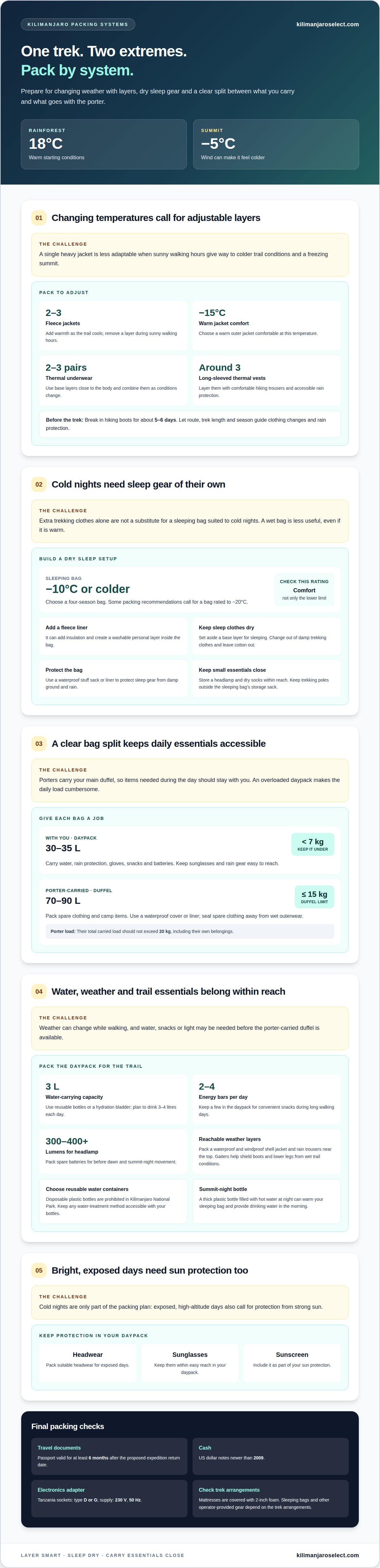
A Kilimanjaro trek can begin in rainforest temperatures of 18°C and reach -5°C at the summit, with wind making conditions feel colder. A careful Kilimanjaro trek packing list prepares you for both sunny walking hours and freezing nights. Layered clothing and warm sleep gear are essential, not extras.
Kilimanjaro’s changing conditions are part of the mountain’s appeal, but they can make packing feel uncertain. Too little warmth can make summit night uncomfortable, while an unplanned pile of gear is harder to manage. The practical solution is to prepare for changing weather with versatile layers, reliable rain protection and equipment suited to your trek.
This guide covers what to look for in a sleeping bag, how to choose a daypack and porter-carried duffel, and which water containers to bring. It also explains how to pack warm headwear, sunglasses and sunscreen for exposed, high-altitude days. A clear plan for cold nights and bright days helps you prepare with confidence and focus on the trail.
Key Takeaways
- Build a clothing system with layers so you can adjust as mountain conditions change.
- Choose a sleeping bag and liner suited to cold nights, rather than relying on extra clothing alone.
- Separate your daypack essentials from porter-carried gear, and plan how you’ll carry water comfortably.
- Protect your head and skin from strong sun with suitable headwear, sunglasses, and sunscreen.
How cold does mount Kilimanjaro get?
Temperatures can shift from 18°C in the rainforest to -5°C at the summit, and wind can make the summit feel colder. A useful Kilimanjaro trek packing list prepares you for these changes with layers you can adjust while climbing, rather than one heavy jacket.
- Pack 2-3 fleece jackets. A mid-layer adds warmth when the trail cools, while one can be removed during sunny walking hours.
- Choose a warm jacket comfortable at -15°C. This outer layer helps protect you during the coldest part of the climb.
- Bring 2-3 pairs of thermal underwear and around three long-sleeved thermal vests. Base layers sit close to the body and can be combined as temperatures change.
- Use trousers that work with your layers. Wear comfortable hiking trousers over a base layer when the air gets colder, and keep rain protection accessible.
- Break in hiking boots for about 5-6 days before the expedition. Familiar footwear supports steady walking across changing trail conditions.
Your route, trek length and the season affect how many clothing changes and how much rain protection to pack. A longer itinerary requires planning for more days, while wet conditions make a waterproof outer layer especially useful. Use these details to shape your Kilimanjaro trek packing list.
On a Kilimanjaro trek, mattresses are covered with 2-inch foam. Bring personal clothing, boots, and weather layers; sleeping bags and other operator-provided gear depend on the trek arrangements.
Carry a passport valid for at least 6 months after your proposed expedition return date. Bring US dollar notes newer than 2009, and pack electronics with a suitable adapter for Tanzania’s type D or G sockets, 230 V supply, and 50 Hz frequency.
Keep sunglasses and rain protection within easy reach in your daypack, and add or remove layers as the weather changes. Porters carry your main duffel, so keep the clothing and personal items you may need during the day with you.
Sleeping bags and liners
Choose a four-season sleeping bag for Kilimanjaro’s cold nights. A practical target is a comfort rating of -10°C or colder; some packing recommendations call for a bag rated to -20°C. Check the comfort rating, not only the lower limit printed on the bag, because comfort is the useful guide for choosing warmth. A fleece liner adds insulation and helps keep the sleeping bag cleaner during several nights of trekking.
- Pair the bag with dry sleep layers. Keep one base layer for sleeping, separate from clothing worn during the day.
- Leave cotton out of your sleep layers. Choose clothing that stays comfortable when you perspire, and change out of damp trekking clothes before bed.
- Pack a liner for hygiene. A washable liner creates a personal layer inside the bag and can add warmth.
- Keep sleep accessories close. Store a headlamp and dry socks where you can reach them without unpacking your full duffel.
- Separate sleeping gear from trekking poles. Secure poles outside your sleeping bag’s storage sack to avoid punctures or snags.
At camp, follow the sleeping routine and protect your bag from damp ground and rain. Use a waterproof stuff sack or liner inside your main bag: even a warm sleeping bag is less useful when wet. A small repair kit can help you fix a minor snag before it worsens.
You can hire trekking gear for a Kilimanjaro climb. Make sure a rented sleeping bag is suitable for cold conditions, and compare its comfort rating with the sleep layers you plan to wear.
Before departure, test the sleeping bag and liner together to check their comfort and fit. Keep the liner dry, and pack clean sleep clothes separately from the layers you wear while trekking.
Daypacks, duffle bags, and water containers
Keep your daypack light and organize your porter-carried duffel separately. Each bag has a distinct purpose: carry daily essentials with you, and pack spare clothing and camp items in the duffel.
- Choose a 30-35L daypack and keep it under 7 kg. This leaves space for water, rain protection, gloves, snacks, and batteries without making the daily load cumbersome.
- Pack main gear in a 70-90L duffle. A waterproof cover or liner helps protect clothing and sleep gear from rain along the trail.
- Keep the porter-carried duffle at or below 15 kg. Porters also carry their own belongings, and their total carried load should not exceed 20 kg.
- Carry capacity for 3 litres of water. Reusable bottles or a hydration bladder make water accessible while you walk; plan to drink 3-4 litres each day.
- Use a thick plastic bottle for summit night. Filled with hot water at night, it can warm your sleeping bag and provide drinking water in the morning.
- Pack waterproof and windproof outerwear near the top. A shell jacket and rain trousers are easier to reach when weather changes, while gaiters help shield boots and lower legs from wet trail conditions.
- Bring 2-4 energy bars per day. Keep a few in the daypack for convenient snacks during long walking days.
- Pack a headlamp above 300-400 lumens, plus spare batteries. Reliable light is useful before dawn and during summit-night movement.
Bring reusable bottles or a hydration bladder instead of disposable plastic bottles. Plastic, recyclable water bottles are prohibited in Kilimanjaro National Park. If you use water treatment, choose a method that suits your routine and keep it accessible with your bottles.
Before leaving camp, pack rain protection, gloves, water, snacks and batteries in easy-to-reach sections of your daypack. Seal spare clothing inside your duffel so a wet shell does not dampen the rest of your gear.
Headwear and sun protection
At altitude, exposed skin and eyes need protection during hiking, even on cool days. Above 4,500 m, sunlight is intense, and Kilimanjaro’s summit sits at about 6,000 m above sea level.
- Wear a brimmed hat or cap while hiking. A brim shades your face and neck during sunny stretches on the mountain.
- Pack a warm hat and neck covering for summit night. These add coverage when cold air and wind reach exposed skin.
- Bring high-UV-protection sunglasses. Strong sunlight at altitude makes eye protection important, especially on bright, open sections.
- Choose sunscreen rated SPF 50+. Apply it to exposed skin and reapply as directed on the product label.
- Carry lip protection and personal toiletries. Add lip balm, toothbrush, toothpaste, biodegradable soap, and any personal hygiene items you use daily.
- Pack a compact personal first-aid kit. Include four Melolin dressings, each measuring 10 cm by 10 cm, for basic wound care.
- Bring prescribed medicines and malaria tablets. Tanzania is a malaria zone, and some anti-malarial courses need to start several weeks before departure.
Keep your waterproof jacket and gloves accessible rather than buried in your duffel. Sunglasses, sunscreen and a warm hat are useful in different conditions, so store them together in your daypack for quick access.
Western Breach equipment is optional and route-specific. For groups using this route, the supplementary list recommends 12- or 14-point crampons, particularly during the wet season. Groups choosing a rope may use a 9-millimetre climbing rope; a 30-metre rope is described as sufficient for 4 climbers.
Before setting out each morning, put sunglasses, sunscreen, headwear and personal medicines in reachable pockets. This simple step keeps sun protection and health supplies handy as conditions change in Tanzania.
Kilimanjaro Select: 7 Days Machame Route Kilimanjaro Treks
Kilimanjaro Select offers a 7 Days Machame Route Kilimanjaro Trek for travelers planning a week on the mountain. Choosing a route and duration helps shape the clothing, sleep gear, and daypack essentials you’ll prepare for your climb.
If you prefer a longer itinerary, the 8 Days Lemosho Route Kilimanjaro Trek is another option. The 6 Days Marangu Route Kilimanjaro Trek offers a shorter trek. Each route has its own schedule, so use your itinerary to organize personal gear and daily essentials.
Once your trek is chosen, your packing list becomes easier to organize around its duration and route. For a Tanzania trip that also includes wildlife viewing, Kilimanjaro Select offers a 2 Days Safari (Tarangire & Ngorongoro Crater).
Contact Kilimanjaro Select to discuss your Kilimanjaro trek plans.
Make your next step a well-planned climb
Let your chosen itinerary guide your final packing decisions: decide what needs to be within reach and what can stay packed until camp. A useful Kilimanjaro trek packing list is more than a collection of gear. It helps you access essentials, avoid last-minute uncertainty and prepare for the trek you have chosen.
Kilimanjaro Select offers several Kilimanjaro routes, including Machame, Lemosho and Marangu. When you are ready to plan your climb, explore the route options and get in touch with the local team to discuss your itinerary.
Contact Kilimanjaro Select to talk through your trek plans. With thoughtful preparation and a route that suits your goals, you can set out ready to meet the mountain with confidence and an open heart.
Frequently Asked Questions
To use trekking poles, or not?
Yes, trekking poles can help reduce stress on your joints, especially during descents. They can reduce joint impact by up to 20%. Choose adjustable poles that feel secure in your hands, and practise using them before the trek. On uneven ground, plant each pole deliberately and keep your hands free when you need them for balance or camp tasks.
Why Pack Smart for Kilimanjaro?
Thoughtful packing makes essentials easier to find and can make your trek more comfortable. Separate what you need while walking from clean camp clothes and sleeping gear. For example, keep your rain shell, gloves and snacks in reachable daypack pockets, and seal spare layers in your duffel. This reduces rummaging and helps keep dry gear protected when the weather changes.
What clothing layers are needed for a Kilimanjaro trek by season and altitude?
Use adjustable layers, then adapt them to the route’s exposure and weather. A useful clothing plan includes 3-4 short-sleeved shirts and 2 long-sleeved shirts, alongside thermal layers for colder sections. In rainy conditions, keep a waterproof shell accessible rather than buried in your main bag. On the described 7-day Lemosho program, a hard-shell rain jacket may be needed from day one, starting at 3,500 m.
What footwear and socks should I pack for climbing Kilimanjaro?
Pack supportive, well-fitting hiking boots and enough socks to change into dry pairs. A practical sock selection includes 3-4 pairs of outer socks, 2-3 pairs of liner socks, and one thick thermal pair for summit night. Liners can help reduce rubbing inside boots, while dry outer socks provide a fresh change after a damp or dusty day on the trail.
What sleeping bag temperature rating and sleeping mat are recommended for Kilimanjaro?
Choose a four-season sleeping bag with a comfort rating of -10°C or colder, and consider a bag rated toward -20°C for added warmth. A liner gives another layer and helps keep the bag clean. Trek mattresses are covered with 2-inch foam, so your sleeping setup can include that base rather than relying on a sleeping bag alone for insulation.
What food, water bottles, and hydration system should I bring for Kilimanjaro?
Bring reusable water bottles or a hydration bladder, along with compact snacks that are easy to reach while walking. Keep a bottle accessible at camp too, rather than relying only on a bladder. Plastic, recyclable water bottles are prohibited in Kilimanjaro National Park. A thick plastic bottle can also hold hot water at night, unlike a metal bottle used as a hot-water bottle.


