
The Wilderness Medical Society suggests 125 mg of Diamox twice daily as a preventive dose for a Kilimanjaro climb, with acetazolamide commonly started 1-2 days before ascent. Diamox is the brand name for acetazolamide, and it may help reduce the risk of acute mountain sickness, but it doesn’t cure altitude illness or guarantee that symptoms won’t develop. Knowing the Diamox side effects and dosage for a Kilimanjaro climb helps you discuss a safe plan with your prescriber before setting out.
It’s sensible to seek clear guidance before taking medication at altitude, especially when possible effects such as tingling, altered taste, and frequent urination could affect your trek. Dose and timing matter, but so does knowing what the medicine can and cannot do.
This guide covers how Diamox works, commonly suggested preventive dosing and timing, possible side effects, and warning signs that need prompt attention. It also explains why gradual ascent and telling your guide when you feel unwell remain essential on Kilimanjaro.
Key Takeaways
- Diamox may help prevent altitude sickness, but it doesn’t cure it or prevent every case. Keep gradual ascent and reporting symptoms to your guide part of your safety plan.
- A commonly suggested preventive dose for a Kilimanjaro climb is 125 mg twice daily. Your prescriber can help determine whether it’s suitable for you and when to begin.
- Learn how to recognize common effects such as tingling, altered taste, nausea, and more frequent urination, along with symptoms that call for urgent attention.
- Compare Kilimanjaro route options and durations to understand how your trek plan fits your goals for the mountain.
Should You Take Diamox to Overcome the Kilimanjaro Altitude?
Diamox is prescription-only, so a prescription is required to obtain it in Tanzania. For prevention, the Wilderness Medical Society suggests 125 mg twice daily, alongside a slow ascent that gives your body time to adjust.
Altitude Sickness Prevention
Diamox, the brand name for acetazolamide, is a preventive medicine that may lower the risk of altitude sickness. At elevations above 3,700 m, acetazolamide 125 mg every 12 hours reduces acute mountain sickness incidence by approximately 50% compared with placebo.
That reduction can matter on Kilimanjaro, whose summit reaches 5,895 m, but prevention is not protection from every symptom. A climber taking Diamox can still develop altitude sickness, so tell your guide promptly about a headache, nausea, or feeling unwell.
Acclimatization Support and Medication Limits
Acetazolamide supports acclimatization by stimulating breathing, which helps increase oxygen in the bloodstream. It also increases bicarbonate excretion through the kidneys, which may explain why some climbers notice tingling or more frequent urination.
The medicine may help your body adjust to altitude, but it does not cure altitude sickness or prevent symptoms from worsening if you continue ascending. It also does not treat severe high-altitude cerebral edema or high-altitude pulmonary edema. Acclimatization still depends on a measured climb and your body’s response, not medication alone.
Descent and Prevention Guidance
On Kilimanjaro, descending to a lower altitude is the definitive response to serious altitude illness. Don’t use Diamox as a reason to continue climbing after symptoms begin: it does not protect against worsening acute mountain sickness during ascent.
Climbing guidance emphasizes a slow ascent and time for the body to adjust. If a day’s ascent exceeds 500 m, try to sleep at a lower altitude than the highest point reached that day. Choose a gradual route plan, report symptoms to your guide immediately, and treat medication as one preventive measure, not a substitute for responding to illness.
Common Diamox side effects
Diamox can cause effects that are manageable for some trekkers but disruptive on Kilimanjaro. Knowing what to watch for can help you distinguish familiar reactions from warning signs that need urgent attention.
Frequent Urination and Tingling
Frequent urination and tingling in the hands, feet, or face are commonly reported with acetazolamide. The medicine increases bicarbonate excretion through the kidneys and can have a diuretic effect, meaning you may need more bathroom stops during the trek.
Drink plenty of water while taking it, and plan for urination during the day and overnight. Tingling may feel unusual, but note when it starts and tell your guide if it worries you or changes. Diamox can also alter the taste of some foods and drinks, which may make familiar meals or drinks seem different.
Other possible effects include nausea, fatigue, drowsiness, vomiting, diarrhea, and decreased libido. Some people report increased sunburn susceptibility or temporary changes in nearsightedness lasting a few days. Track symptoms that affect your comfort on the ascent rather than assuming they are caused by altitude sickness.
Serious Effects Requiring Urgent Care
Stop taking Diamox and inform your guide immediately if you develop a severe rash or hives, breathing difficulty, wheezing, unusual fatigue or confusion, severe vomiting, or a persistent headache. These symptoms need prompt medical attention on the mountain.
A severe allergic reaction may also involve swelling of the lips, tongue, or throat. Seek medical advice immediately if swelling or difficulty breathing occurs. A persistent headache can also signal altitude sickness, so report it to your guide rather than assuming it is a medication effect.
Acetazolamide may interact with other medicines, so discuss your medications with a doctor before the trek. People with a sulfa medication allergy are advised not to take Diamox. Share your complete medication and allergy history so your prescriber can assess whether it is appropriate, including if you already experience nausea or tingling.
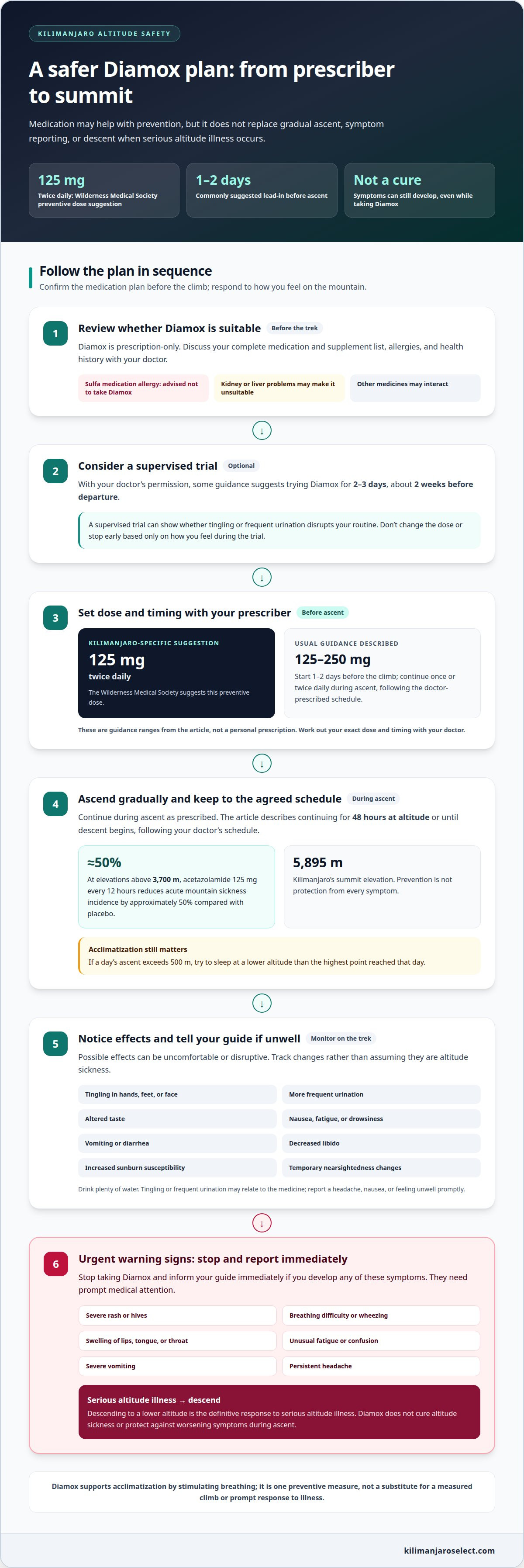
When to start and how long to continue the medication
For a Kilimanjaro ascent, acetazolamide is commonly started before climbing and continued during the ascent. Work out the exact timing and duration with your doctor rather than making changes on the mountain.
Usual guidance describes a dose of 125 to 250 mg, starting one to two days before the climb and continuing once or twice daily during ascent. A Kilimanjaro-specific recommendation is to begin one to two days before ascending. Continue the medication for 48 hours at altitude or until descent begins, following the schedule your doctor prescribed.
Some guidance suggests trying Diamox for two to three days about two weeks before departure, with your doctor’s permission. A supervised trial can reveal whether effects such as tingling or frequent urination disrupt your routine before the climb. Don’t change the dose or stop early based only on how you feel during the trial.
Before deciding, tell your doctor about sulfa medication allergies, kidney or liver problems, and every medicine or supplement you use. People with a sulfa medication allergy are advised not to take Diamox. Kidney or liver problems may also make it unsuitable, and other medicines may interact with acetazolamide. Your doctor can weigh your health, planned ascent, and possible reactions.
Diamox may interact with other medicines, so review your full medication list with your doctor before climbing. Don’t assume alcohol is compatible with Diamox at altitude; ask your doctor for advice based on your health and medication plan.
Contact your doctor before departure if you develop an allergic reaction or troublesome effects during a trial. On the mountain, tell your guide promptly if you feel unwell. Medication doesn’t replace action when altitude sickness symptoms appear. The aim is a considered prevention plan, not treating Diamox as a guarantee of success.
Recommended Diamox dosage for Kilimanjaro
The Wilderness Medical Society suggests 125 mg of Diamox twice daily for prevention during a Kilimanjaro climb. This is a commonly cited regimen, not a personal prescription. Your doctor should determine whether acetazolamide suits your health, planned ascent, and other medicines before you begin taking Diamox.
Many Diamox tablets contain 250 mg, so a 125 mg dose is half a tablet. The suggested schedule is commonly taken in the morning and evening, with meals. Taking it with food may help reduce nausea and stomach discomfort. Follow the tablet instructions and your prescriber’s directions rather than adjusting a dose yourself.
Some physicians may recommend 62.5 mg twice daily for a climber, based on individual circumstances. The same prescribed dose is generally continued across ascent days. Don’t increase the amount because you feel unwell or assume a larger dose will treat acute mountain sickness. Diamox is preventive, and it doesn’t replace responding to altitude symptoms.
Acetazolamide stimulates breathing, helping increase oxygen in the bloodstream. It also increases bicarbonate excretion through the kidneys. These effects support acclimatization, but a higher dose does not necessarily improve adjustment to altitude. Discuss the recommended preventive dose with your doctor, especially if you have kidney or liver problems.
For the dose commonly suggested, 125 mg twice daily equals 250 mg total in a day. Do not exceed 500 mg of acetazolamide per day. The older 250 mg dose was commonly prescribed before research supported a lower dose with equivalent preventive benefit and fewer side effects. More medication can bring unwanted effects, including tingling, frequent urination, and nausea.
Before your trek, discuss your prescription and medication questions with a doctor, including how the schedule fits your route’s ascent days. Take Diamox only as prescribed, and tell your guide if altitude symptoms begin. A medication plan can support summit preparation, but it cannot guarantee freedom from altitude sickness or make it safe to continue ascending with symptoms.
Kilimanjaro Select: 7 Days Machame Route Kilimanjaro Treks
Kilimanjaro Select offers 7 Days Machame Route Kilimanjaro Treks for travelers planning a climb in Tanzania. Choosing a route is a practical next step once you’ve discussed medication and altitude preparation with your doctor. Route duration is one consideration as you shape your itinerary, alongside your personal goals for the mountain.
You can also consider the 8 Days Lemosho Route Kilimanjaro Treks or 6 Days Marangu Route Kilimanjaro Treks. Each gives you a different trek duration to weigh as you plan your time on Kilimanjaro. Keep your prescribed Diamox schedule separate from route decisions, and follow your doctor’s instructions throughout preparation.
You’re welcome to explore the Kilimanjaro trek options or contact Kilimanjaro Select to discuss your climb.
Carry Your Preparation Into the Climb
Thoughtful decisions before the trail begins help shape your Kilimanjaro plans. Consider Diamox side effects and dosage for a Kilimanjaro climb as part of your wider preparation, alongside medical advice and the experience you hope to have in Tanzania. A clear plan can help you prepare while staying alert to changes in your wellbeing.
As you plan, consider what kind of mountain experience suits you and how you want your trek to fit into your time in Tanzania. Kilimanjaro Select offers route options for different itineraries, so you can plan the climb itself while keeping your doctor involved in personal medication decisions.
Contact Kilimanjaro Select to talk about planning your Kilimanjaro trek. May your preparation bring you closer to a rewarding journey on the mountain.
Frequently Asked Questions
What is Diamox?
Diamox is the brand name for acetazolamide, a prescription medicine used to help prevent acute mountain sickness. It supports the body’s response to altitude but does not replace gradual ascent or attention to symptoms. If you develop a headache while taking it, tell your guide rather than assuming the medicine rules out altitude illness.
Is Diamox Necessary For Kilimanjaro Climbing?
No. Diamox isn’t necessary for every Kilimanjaro climber. Whether it is appropriate depends on personal health, the route’s ascent profile, and a prescriber’s assessment. A doctor should consider kidney or liver problems, sulfa medication allergy, and other medicines. Even when prescribed, Diamox is only one part of preparation, not a substitute for responding to symptoms.
So is it worth using taking altitude sickness tablets on Kilimanjaro?
It may be worthwhile for some climbers because acetazolamide can lower the risk of acute mountain sickness, but it does not prevent every case. Discuss your health, planned ascent, and possible side effects with a doctor. If you are concerned about medication reactions, ask about a supervised trial before travel rather than testing it for the first time on the mountain.
What is the recommended Diamox dose for preventing altitude sickness on Kilimanjaro?
The Wilderness Medical Society suggests 125 mg twice daily for prevention on a Kilimanjaro climb. The right schedule for you still depends on medical suitability and your prescriber’s instructions. Don’t copy another climber’s tablets or adjust the amount yourself. For the diamox side effects and dosage for kilimanjaro climb, confirm with your prescriber how to take your prescription and what to do if you miss a dose or experience a reaction.
When should you start and stop taking Diamox for a Kilimanjaro climb?
Common advice is to begin acetazolamide one to two days before the climb, then continue during ascent. Guidance also recommends continuing for 48 hours at altitude or until descent begins. Your doctor’s prescribed plan should determine the timing for your trek. Don’t stop or extend the course on your own, particularly if symptoms appear or your itinerary changes.
What are common Diamox side effects at altitude?
Possible effects include frequent urination, tingling in the hands or feet, altered taste, nausea, and fatigue. Understanding Diamox side effects and dosage for a Kilimanjaro climb can help you prepare for how the medication may affect your trek. Note when an effect starts and whether it changes, then discuss it with your guide or prescriber. A severe rash, breathing difficulty, confusion, severe vomiting, or a persistent headache needs urgent attention.


