
Eight days gives the Lemosho climb more room for gradual acclimatisation, across an approximate walking distance of 65-75 km depending on trail variations, with Uhuru Peak at 5,895 metres above sea level. A Lemosho Route 8-day trek includes a climb-high, sleep-lower approach, including a climb to Lava Tower at approximately 4,600 metres before descending to Barranco Camp. The longer itinerary allows more time to adjust as the trail gains height.
It’s natural to want both the wonder of Kilimanjaro’s changing landscapes and a clear sense of what the climb asks of you. This route is a trekking journey rather than a technical climbing expedition, but the altitude and long summit day make the daily plan important.
This overview explains what each day involves, including the route, distances, elevations and estimated walking times, as well as the height of Uhuru Peak. Use it to understand how the eight-day schedule unfolds and decide whether its pace and challenges suit the adventure you have in mind.
Key Takeaways
- See how the route’s gradual ascent and climb-high, sleep-lower pattern support acclimatisation, and learn which symptoms to report to your guide.
- Follow the journey from the western side of Kilimanjaro through each camp, so you can picture how the trek unfolds day by day.
- Understand what the summit attempt via Stella Point involves, including the demanding ascent and descent before returning to camp.
- Use the daily distance, walking-time and elevation details to gauge the route’s physical demands and prepare for changing terrain.
Why Choose the 8-Day Lemosho Route?
The Lemosho Route 8 day trek gives trekkers more time to adjust as the climb gains altitude. From Londorossi Gate, the trail moves through forest toward the Shira Plateau and higher mountain camps.
Gradual Ascent and Acclimatisation
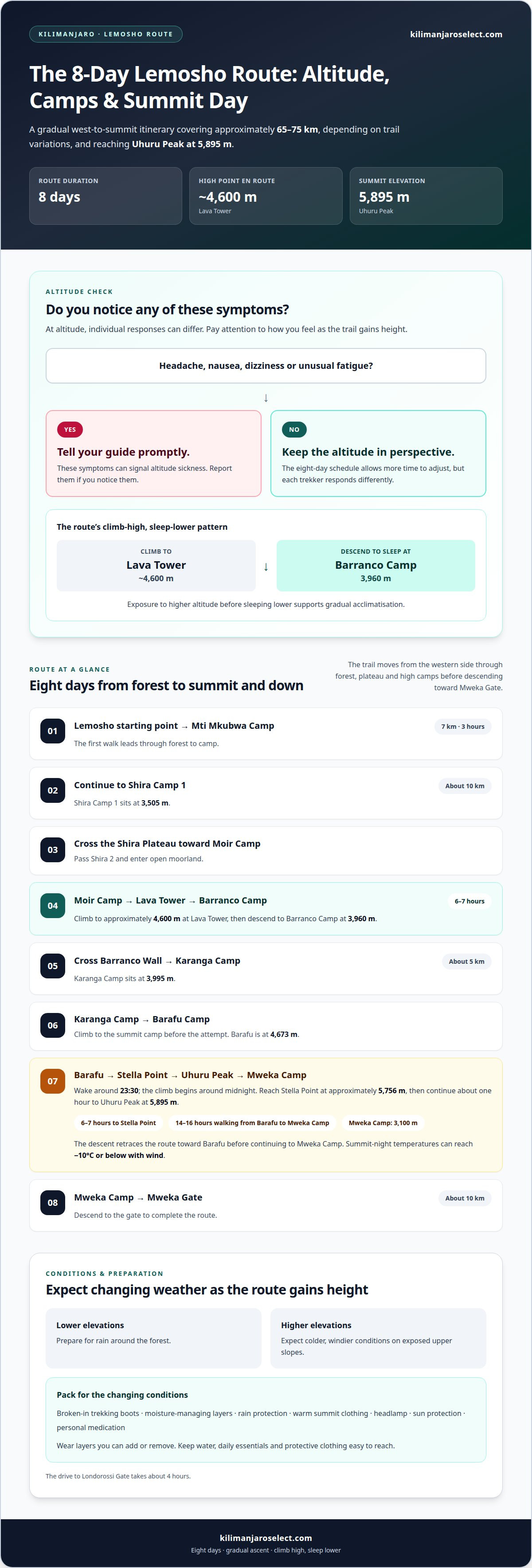
Look at the altitude profile, not just the daily distance. The route reaches approximately 4,600 metres at Lava Tower, then descends to Barranco Camp. This climb-high, sleep-lower pattern exposes trekkers to higher altitude before they sleep lower, supporting gradual acclimatisation along the Lemosho Route.
Headache, nausea, dizziness or unusual fatigue can signal altitude sickness. Tell your guide promptly if you notice these symptoms. A Lemosho Route 8 day trek allows more time for acclimatisation, but individual responses to altitude still shape how the climb feels.
Summit Success, Season, and Weather
Summit outcomes vary with acclimatisation and each trekker’s response to altitude, so no single success rate can describe everyone’s experience. When considering this itinerary, look at its gradual schedule and whether you’re comfortable managing consecutive days of walking.
Weather shifts across Kilimanjaro’s forest, plateau and exposed upper slopes. Prepare for rain at lower elevations and colder, windier conditions higher up. Wear layers that you can add or remove as conditions change.
Pack broken-in trekking boots, moisture-managing layers, rain protection, warm summit clothing, a headlamp, sun protection and any personal medication. Keep water and daily essentials within easy reach.
Reach the Lemosho trailhead by road via Londorossi Gate. The drive to the gate takes about 4 hours; plan your transfer around the trek’s start.
Eight-day Lemosho Route itinerary
This eight-day itinerary crosses forest, moorland and high mountain camps before the summit attempt. The Lemosho Route 8 day trek follows a clear progression from the western trailhead to the summit, then descends toward Mweka Gate.
Typical Daily Itinerary
Use each camp change to picture the terrain and rhythm, rather than focusing on distance alone. The route begins in forest, crosses the Shira Plateau, then approaches Barranco Wall and the summit camps. This Lemosho Route 8 day trek itinerary also makes clear where the demanding summit stage falls.
- Day one: Walk from the Lemosho starting point to camp.
- Day two: Continue about 10 km to Shira Camp 1, at 3,505 metres.
- Day three: Cross the Shira Plateau through Shira 2 toward Moir Camp, entering open moorland.
- Day four: Travel from Moir Camp via Lava Tower to Barranco Camp, at 3,960 metres.
- Day five: Cross the Barranco Wall and continue about 5 km to Karanga Camp, at 3,995 metres.
- Day six: Climb from Karanga to Barafu Camp before the summit attempt.
- Day seven: Climb from Barafu to Uhuru Peak, then descend to Mweka Camp.
- Day eight: Descend about 10 km from Mweka Camp to Mweka Gate.
Mountain Camps Along the Route
The camps mark distinct stages of the mountain journey. Mti Mkubwa sits among the forest, while Shira 1 and Shira 2 lead onto the plateau. Barranco Camp lies below Barranco Wall, and Karanga is the next overnight stop before Barafu.
Compared with a seven-day schedule, the eight-day plan spreads the approach across more days. Compare the overnight camps and the timing of the Lava Tower climb, descent and summit attempt to see how the itineraries differ in pace.
How high is Uhuru Peak?
Uhuru Peak rises 5,895 metres above sea level, making it the highest point on Mount Kilimanjaro. On summit day, trekkers leave Barafu Camp at 4,673 metres after waking around 23:30. The climb begins around midnight, when darkness and cold shape the first hours toward the summit.
The route reaches Stella Point at approximately 5,756 metres, after a climb that takes six to seven hours. From Stella Point, the final ascent to Uhuru Peak takes about one hour. This last section follows the crater rim, where a steady pace matters as the trail continues upward through thin, cold air.
The itinerary allows 14-16 hours of walking from Barafu, over the summit and down to Mweka Camp. Summit-night temperatures can reach −10°C or below with wind, so prepare warm layers and keep protective clothing easy to reach. After Uhuru Peak, the descent retraces the route toward Barafu before continuing to Mweka Camp, at 3,100 metres. The long return makes conserving energy on the ascent practical, not merely comfortable.
Kilimanjaro’s first recorded summit was reached by Hans Meyer and Ludwig Purtscheller on 6 October 1889. Their guide, Yohani Kinyala Lauwo, was eighteen years old during the expedition. That history gives the summit a human story alongside its great height, while today’s route asks trekkers to focus on their own gradual progress from Barafu to Stella Point and onward.
Park-fee totals depend on the applicable charges and the eight-day itinerary. Because permits and park access are tied to the route, plan for the trek’s duration and required entry arrangements.
Trekking distances, durations and elevations
Distance, walking time and elevation together show what each stage of this Kilimanjaro climb asks of you. The Lemosho itinerary covers approximately 65-75 km, depending on trail variations.
Route Distance and Trek Duration
Use daily distances alongside walking times to judge the effort, since steep climbs and descents can make similar distances feel different. The first walk to Mti Mkubwa Camp is listed as 7 km and takes 3 hours. From Shira Camp 2, the route passes Lava Tower before reaching Barranco Camp, a 6-7-hour trek.
The Karanga-to-Barafu stage involves both an ascent and a descent, so its effort may vary. The final descent from Mweka Camp to Mweka Gate covers approximately 10 km.
Camp Elevations and Altitude Changes
Camp elevations help you follow the route’s changing altitude. Mti Mkubwa sits at 2,780 metres, Shira 1 at 3,505 metres and Shira 2 at 3,850 metres. Barranco Camp is at 3,960 metres, while Karanga Camp is at 3,995 metres.
Compare each overnight height with the day’s high point. The Lava Tower approach reaches approximately 4,600 metres before the descent to Barranco. From Karanga to Barafu, the itinerary gains 770 metres; the descent from Mweka Camp to Mweka Gate loses 1,300 metres.
Uhuru Peak Elevation
Uhuru Peak stands at 5,895 metres above sea level. That figure gives the summit’s elevation, while the route’s camp heights show how much higher the final climb reaches than the preceding nights.
For planning, compare Barafu Camp at 4,673 metres with the summit elevation, then account for the descent to Mweka Camp at 3,100 metres. This ascent-and-descent profile makes footwear, pacing and energy management relevant across the whole summit stage.
For an ethical trek in Tanzania, treat guides and porters respectfully, follow your guide’s instructions and agree on tipping expectations before the climb. Their work supports the journey, and considerate conduct helps keep camp routines respectful.
Use these figures to discuss the route’s daily effort and elevation profile as you explore the eight-day Lemosho trek.
Kilimanjaro Select: 7 Days Machame Route Kilimanjaro Treks
Kilimanjaro Select offers an 8 Days Lemosho Route Kilimanjaro Trek for travellers considering the itinerary described above. If you’re weighing route duration, its 7 Days Machame Route Kilimanjaro Treks and 6 Days Marangu Route Kilimanjaro Treks provide other trek-length options to compare. Your choice can start with how many days you want to spend on the mountain and which route you’d like to explore.
Once you’ve considered the daily stages, camp elevations and summit-day demands, turn to Kilimanjaro Select to plan around the Lemosho itinerary. If you’re also extending your Tanzania stay, the company offers a 2 Days Safari covering Tarangire and Ngorongoro Crater.
Contact Kilimanjaro Select to discuss your preferred trek.
Make your Kilimanjaro plans your own
Choosing an eight-day Lemosho Route trek is about more than reaching the summit. Consider the mountain experience you want: time to settle into each day, space to appreciate changing landscapes and a clear plan for the effort ahead. Let your priorities shape the details, from your preferred trekking pace to how the climb fits into your wider Tanzania journey.
Think about how you want to feel during the trek, what preparation fits your routine and whether you want quiet time to take in the mountain’s changing scenery. These preferences can help you choose a plan that feels meaningful, rather than simply filling an itinerary.
Kilimanjaro Select can help turn those priorities into a practical next step. Share what you hope to experience and the questions still shaping your plans, then contact Kilimanjaro Select to begin planning your climb.
With thoughtful preparation and an open mind, you can take on Kilimanjaro one step at a time. Let your next decision bring the adventure closer.
Frequently Asked Questions
Is Lemosho harder than Machame?
Neither route is automatically harder for every trekker. Compare the daily pace, terrain, altitude profile and time for acclimatisation instead of relying on the route name alone. Kilimanjaro Select offers an eight-day Lemosho itinerary and a seven-day Machame trek. Lemosho’s longer schedule allows more time for acclimatisation, though your fitness, response to altitude and comfort with long walking days also affect the challenge.
What Is Included in the 8-Day Lemosho Kilimanjaro Package?
Kilimanjaro Select offers a guided, eight-day Mount Kilimanjaro trekking itinerary. The day plan sets out the route and mountain camps, giving you a framework for understanding the climb. International airfare, standalone hotel bookings and travel insurance are not included as services offered by Kilimanjaro Select, so arrange these separately. For other inclusions, refer to the package terms you receive when booking.
What is the 8-day Lemosho Route itinerary day by day?
The itinerary moves from Lemosho Gate to Mti Mkubwa, then to Shira 1. It continues through Shira 2 to Moir Camp, then via Lava Tower to Barranco Camp. From there, trekkers cross to Karanga and Barafu before the summit attempt and descent to Mweka Camp. The final day follows the trail from Mweka Camp to Mweka Gate, completing the eight-day route.
What is included and excluded in Lemosho trek package prices?
A Lemosho booking covers a trekking itinerary. Read the booking terms for specific package inclusions rather than making assumptions. Kilimanjaro Select does not sell international airfare, standalone hotel bookings or travel insurance. The quote depends on the route, itinerary length and travel arrangements.
How difficult is the 8-day Lemosho Route, and what fitness level is needed?
The trek is physically demanding, combining repeated walking days, steep sections and high altitude. Prepare with regular walks and uphill practice, gradually increasing the time you spend moving. Comfortable, broken-in boots and a steady pace help on uneven trails. Technical rock-climbing training isn’t required, but be ready for sustained effort and follow your guide’s instructions.
What are the main altitude sickness risks and acclimatization measures on this trek?
Altitude sickness can involve headache, nausea, dizziness or unusual fatigue. Tell your guide promptly if symptoms appear instead of trying to push through quietly. The route’s climb-high, sleep-lower pattern includes ascending toward Lava Tower before descending to camp, providing an acclimatisation stage. The eight-day schedule allows more time for gradual adjustment, but reaching the summit is not assured.


