
Kilimanjaro fitness comes from steady preparation, not athletic talent alone. To understand how to prepare for a Kilimanjaro trek, focus on regular cardiovascular exercise, stronger legs and longer hikes that build comfort on your feet. A practical training plan can span eight weeks, with exercise three to five days each week.
It’s natural to wonder whether you need to be exceptionally fit to reach the summit. The more useful goal is to prepare for the demands of a long trek: Mount Kilimanjaro rises to 5,895 metres, and the thinner air makes a patient pace and good endurance important.
Learn what fitness level to aim for, why the mountain can feel challenging, and how to build cardiovascular fitness with hills, stairs or a treadmill. This guide also covers leg strength, hiking stamina and recovery, helping you develop a steady routine before your Tanzanian adventure.
Key Takeaways
- Build cardiovascular endurance with regular uphill walks, stairs, or incline treadmill sessions, increasing the challenge gradually.
- Prepare for altitude as well as distance: steady pacing and time to acclimatize matter on the mountain.
- Combine hiking practice with leg strength and recovery so your training supports long days on your feet.
- Choose a training routine you can sustain, then match your trek plans to the time and preparation you can commit.
1. Cardiovascular training on hills, stairs, and treadmills
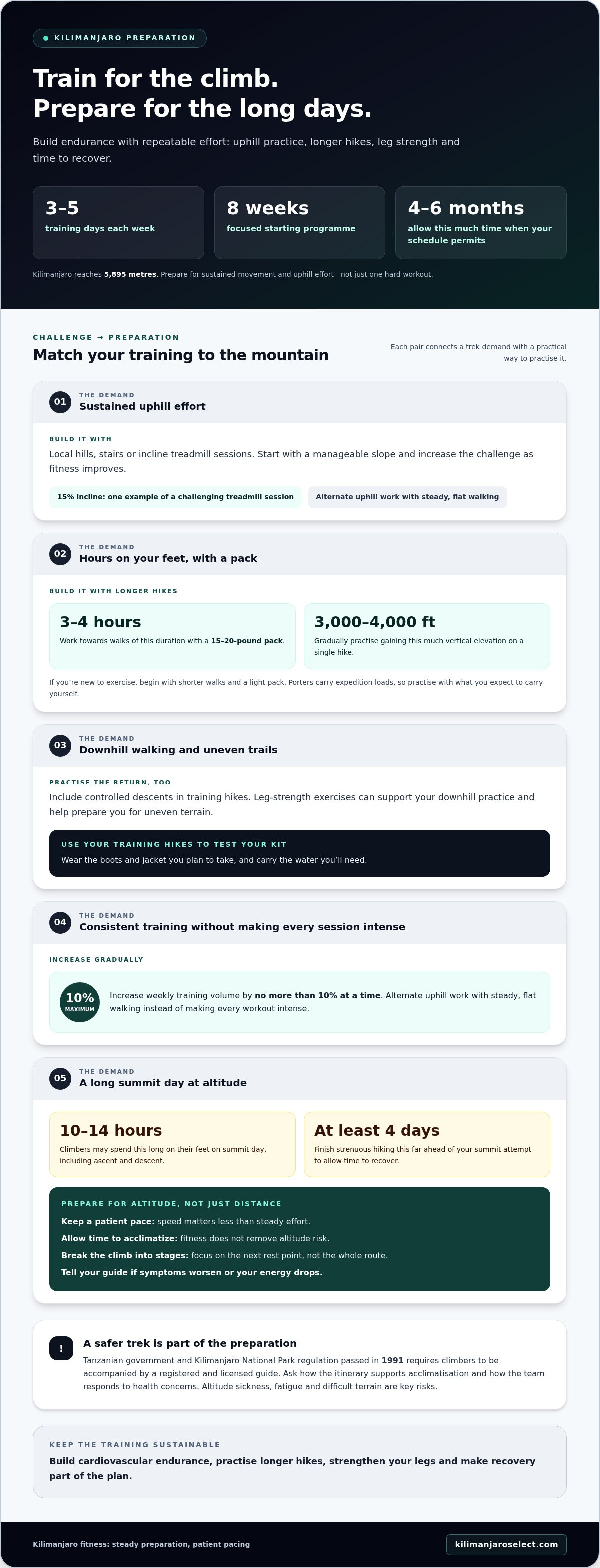
A practical way to prepare for a Kilimanjaro trek is to build endurance gradually. Mount Kilimanjaro reaches 5,895 metres, so training should combine sustained movement with uphill effort. Aim for three to five training days each week, and allow four to six months when your schedule permits. An eight-week walking programme can provide a focused starting point.
Use local hills or stairs to practise climbing at a controlled pace. On a treadmill, add incline intervals, beginning with a manageable slope and increasing it as your fitness improves. A 15% incline is one example of a challenging session. Alternate uphill work with steady, flat walking, rather than making every workout intense. This develops cardiovascular fitness without turning each session into a test.
Build longer hikes into your week. Work towards walking for three to four hours with a 15–20-pound pack, and gradually practise gaining 3,000–4,000 vertical feet on a single hike. Increase your weekly training volume by no more than 10% at a time. If you’re new to exercise, begin with light pack weight and shorter walks before extending either.
Practise walking downhill, too. Controlled descents prepare your legs for the return journey and help you manage uneven trails; strength exercises can support this work. On training hikes, wear the boots and jacket you plan to take, and carry the water you’ll need. Porters carry expedition loads, so your practice pack should reflect what you expect to carry yourself.
Choose a safe, reputable Kilimanjaro guide or tour operator by checking that the trek is led by a registered and licensed guide, as required by a Tanzanian government and Kilimanjaro National Park regulation passed in 1991. Ask how the itinerary allows for acclimatisation and how the team responds to health concerns.
Altitude sickness is a key risk, along with fatigue and difficult terrain. Tell your guide promptly if symptoms worsen, and follow the team’s assessment and descent or evacuation procedures.
2. Kilimanjaro’s difficulty and summit success
Summit day tests endurance differently from ordinary walking. Climbers may spend 10–14 hours on their feet, including a long ascent and descent. At altitude, the body works harder, so a steady pace matters more than speed. A 45% summit success rate across all routes also shows that reaching Uhuru Peak is not simply a fitness test. Acclimatisation, health, route timing, and how your body responds all play a part.
Prepare mentally by breaking the climb into manageable stages. On summit night, focus on reaching the next rest point instead of imagining the whole route at once. Practise walking patiently and deliberately on training hikes, and expect your pace to slow at altitude. Keep warm layers within easy reach, since changing conditions can make it harder to stay comfortable and focused.
Rest is part of the summit plan. Finish strenuous hiking at least four days before your summit attempt to give your body time to recover before the most demanding stretch. During the climb, use rest stops to drink, adjust your layers and check how you feel. If your energy drops, tell your guide instead of trying to keep up with the group.
Clarify summit-night support before the trek begins. Aim for one guide or support staff member per climber on summit night, so individual needs can receive attention during the slow ascent. Ask how the team will stay together, communicate concerns and respond if someone needs to turn back. Knowing the plan can help you feel mentally prepared, without treating summit success as guaranteed.
Route length also shapes the experience. Spending at least eight days on Kilimanjaro can improve acclimatisation and summit chances, while shorter itineraries leave less time to adjust. As you compare Kilimanjaro route options, consider how the schedule balances walking, rest, and gradual ascent. A thoughtful plan gives you a clearer rhythm for the mountain and its final night.
3. How fit do you have to be to Climb Kilimanjaro?
You don’t need to be an elite athlete, but you should be ready for repeated days of hiking and changing altitude. Route duration affects how much time your body has to adjust, so compare the itinerary as well as distance. The Machame Route is 61 kilometres over 6–7 days, while Lemosho is 67 kilometres over 7–8 days. The Northern Circuit covers 88 kilometres over 8–9 days.
According to the World Health Organization, any unacclimatized traveler proceeding to a sleeping altitude of ≥2,450 m (≥8,000 ft), and sometimes lower, is at risk for altitude illness. That is one reason an eight-day trek can be a practical choice: a gradual itinerary allows more time for acclimatisation than a compressed climb. Fitness helps with walking, but it cannot remove altitude risk or replace a suitable pace.
Daily effort depends on the route and elevation profile, not distance alone. On the Western Approach Route, the average ascent day involves 5 miles of hiking, 5 hours of walking, and 2,100 feet of elevation gain. The final approach to Uhuru Peak can take 8–10 hours of hiking. These examples show why your training program should prepare you to keep moving for hours, not merely cover a short distance quickly.
For permits and regulations, arrange the trek’s park-entry paperwork as part of your travel planning. A Tanzanian government and Kilimanjaro National Park regulation passed in 1991 requires climbers to be accompanied by a registered and licensed guide; disposable plastic bottles are not allowed on the mountain.
There is no single best time of year for every climber. Choose dates that leave you time to train and prepare for changing mountain conditions, then plan your Tanzania travel around them. Strong preparation means choosing a route duration and pace that match your fitness, realistic expectations and need for time to adapt.
4. Fitness needs for a Kilimanjaro trek
A useful plan for how to prepare for a Kilimanjaro trek tracks repeatable effort, not one impressive workout. Build a routine you can maintain alongside work and daily responsibilities, then record how each session feels. Note your pace, terrain, backpack comfort and recovery. These details show whether your fitness is improving steadily or whether a part of your training needs adjustment.
Progress gradually. Increase your total weekly training volume by 10% or less at a time, and make approximately every fourth week an easier consolidation week at about 50% of the previous big week's volume. This gives you a chance to absorb the work before adding more. If fatigue changes your walking form, reduce the next session’s duration or intensity rather than pushing through poor movement.
Strength work can support climbing and controlled steps downhill, but allow your muscles time to recover. Leave at least 48 hours after strenuous weight training for the same muscle group. If you’re new to weights, use light loads during the first two weeks and focus on steady technique. Structure a set around 8 to 12 repetitions, then finish with 5–10 minutes of stretching after each workout.
Use a one- or two-day local hiking trial to test your routine before travelling. Carry at least three litres of water or three kilograms in your daypack during training walks, and notice how the load affects your posture. Wear the footwear and layers you expect to use, so you can identify rubbing or fit problems early. Seek a medical doctor’s advice before beginning a fitness programme. Knowing how to prepare for a Kilimanjaro trek means practising the details, not just exercising. Build your routine with care, then explore Kilimanjaro trek options that fit your plans.
Kilimanjaro Select: 7 Days Machame Route Kilimanjaro Treks
Kilimanjaro Select offers 7 Days Machame Route Kilimanjaro Treks for travelers planning a structured climb on Mount Kilimanjaro. If you’re weighing route length against your preparation time, its 8 Days Lemosho Route Kilimanjaro Treks provide a longer itinerary, while the 6 Days Marangu Route Kilimanjaro Treks offer a shorter option. Consider how much time you can allow for trekking and acclimatisation as you decide which route suits your plans.
Once you’ve considered your fitness, training schedule, and preferred trek duration, Kilimanjaro Select can help you take the next step with a Kilimanjaro trek. You can also pair your mountain journey with a 2 Days Safari (Tarangire & Ngorongoro Crater) as part of your Tanzania travel plans.
Contact Kilimanjaro Select to discuss your trek plans.
Make your preparation part of the journey
Turn your intention into a routine that fits everyday life. Set regular times for exercise, record how each session feels, and ease off if fatigue affects your form. This gives you a clearer picture of your progress and makes preparation for a Kilimanjaro trek a steady commitment rather than a last-minute push.
As you plan your Tanzania adventure, consider the experience you want as well as the training you can sustain. Think about your available travel time, preferred route pace and how you’d like to spend your days after the climb. Kilimanjaro Select offers several trek options, so you can discuss plans that suit your schedule. Start with a conversation about your goals and the journey you hope to have.
Contact Kilimanjaro Select to plan your trek, and take the first step toward your mountain adventure with purpose and confidence.
Frequently Asked Questions
How fit do you have to be to Climb Kilimanjaro?
You need enough endurance to walk steadily through demanding days, not the fitness of a competitive athlete. Test your readiness on a hike with uneven ground and a sustained climb. Notice whether you can maintain a comfortable pace, manage your backpack and recover well afterward. This practical experience can show what your training needs to address before departure.
What do I need to bring?
Bring your personal travel documents, broken-in hiking boots, suitable clothing and any items you rely on daily. A small daypack can hold water, snacks, sun protection and spare layers for changing conditions. Keep frequently used essentials easy to reach, and pack a dry change of clothing separately. Before leaving home, try your full daypack on a training walk to spot uncomfortable straps or missing essentials.
What medical supplies do I need for Kilimanjaro?
Pack your regular prescribed medicines and basic personal care supplies, such as blister dressings and small wound-care items. Keep medicines in their original packaging and somewhere accessible. Ask a medical professional which supplies suit your health history and whether any prescribed treatment is appropriate for your trek. Don’t start a new medicine during the climb without appropriate medical advice.
How many days should you allow for a Kilimanjaro trek, and which route is best?
Allow enough days for a gradual itinerary and time to adjust to altitude. Of the available routes, the eight-day Lemosho itinerary gives you more time on the mountain than the six-day Marangu itinerary. The best fit depends on your schedule, hiking experience and preference for a longer or shorter trek. Choose an itinerary with a realistic pace, not simply the earliest finish.
How should you train and prepare physically for Kilimanjaro?
Build a balanced routine with walking, uphill practice and simple strength exercises. For example, alternate a steady walk with stair climbing, then use another session for controlled step-ups or squats. Keep a brief training log of duration, terrain, pack comfort and how you feel afterward. This helps you spot patterns and adjust your effort before longer hikes become uncomfortable.
What gear and clothing do you need for a Kilimanjaro trek?
Choose layers you can adjust as temperatures and conditions change. Useful examples include a moisture-managing base layer, a warm mid-layer, a weather-resistant outer layer, gloves and a warm hat. Take a four-season sleeping bag, a headlamp and broken-in boots suited to rocky paths. Test your clothing and equipment on local hikes to catch fit problems before travelling to Tanzania.