
You don’t need a mountain nearby to prepare for Kilimanjaro, but you do need to build your fitness. The summit attempt typically involves 6-8 hours of uphill hiking, and an altitude training plan for Kilimanjaro without mountain access can develop the aerobic fitness and leg strength for that sustained effort through walking, stairs and incline treadmill sessions. These workouts prepare your body for exertion, but they don’t replace acclimatisation at altitude.
It’s natural to wonder whether regular workouts can prepare you for a high-altitude trek. They can build the stamina to keep moving, even if you train on city streets or indoors.
This guide explains why training matters and how to build a practical routine without mountain access. Learn how to progress your cardio, use stairs and treadmill inclines, and prepare for long trail days while making room for recovery.
Key Takeaways
- Build your preparation progressively, with regular cardio, strength work, and recovery rather than trying to do too much at once.
- Use stairs and incline treadmill walking to practise sustained uphill effort when you don’t have access to mountain trails.
- Include longer walks and practise with your trekking boots so your body can adapt to time on your feet.
- Keep fitness training and altitude acclimatisation distinct: strong cardiovascular conditioning helps with exertion but doesn’t replace time to adjust to altitude.
Do I need to train for Kilimanjaro?
Yes. Training can prepare you for sustained hiking and consecutive days on the trail, but fitness cannot replace acclimatisation. Build endurance gradually, then ease off before departure.
-
Prepare for Multi-Day Trekking
Build up to long walks on consecutive days, with each outing lasting more than half a day. This helps you practise moving while tired, rather than relying on one strong training day. The summit attempt typically includes 6-8 hours of uphill hiking, while summit night and descent take twelve to fifteen hours. Practise with your trekking boots and notice any rubbing or discomfort early.
-
Plan Altitude Preparation and Simulation
Use training to prepare your heart and legs, but don’t treat simulated altitude as acclimatisation. Real altitude exposure can help you understand how your body feels; spending a few nights above 3,000 metres is one example when accessible. Above 4,000 metres, the body works harder with less oxygen. Headache, dizziness, shortness of breath, and muscle tiredness can signal acute mountain sickness. Severe symptoms call for descent to a lower altitude.
-
Understand Acclimatization Days and Routes
Follow a slow ascent, drink regularly, and allow time to adjust as you climb. Kilimanjaro routes differ in duration, and the 8-day Lemosho Route offers more acclimatisation time. When possible, spend a few days adjusting to higher altitude before strenuous mountain activity. A training session at elevation can show how exertion feels, but a single day there cannot acclimatise you for the trek.
-
Build Mental Readiness and Pacing
Practise a patient pace instead of trying to cover ground quickly. Break a walk into small goals, such as reaching a ridge 500 metres away, then stop for five minutes before continuing. On Kilimanjaro, keep effort steady, drink as you go, and listen to changes in how you feel. In the final week before departure, take at least 3 full rest days. Arrive rested, not carrying fatigue from a last-minute hard workout.
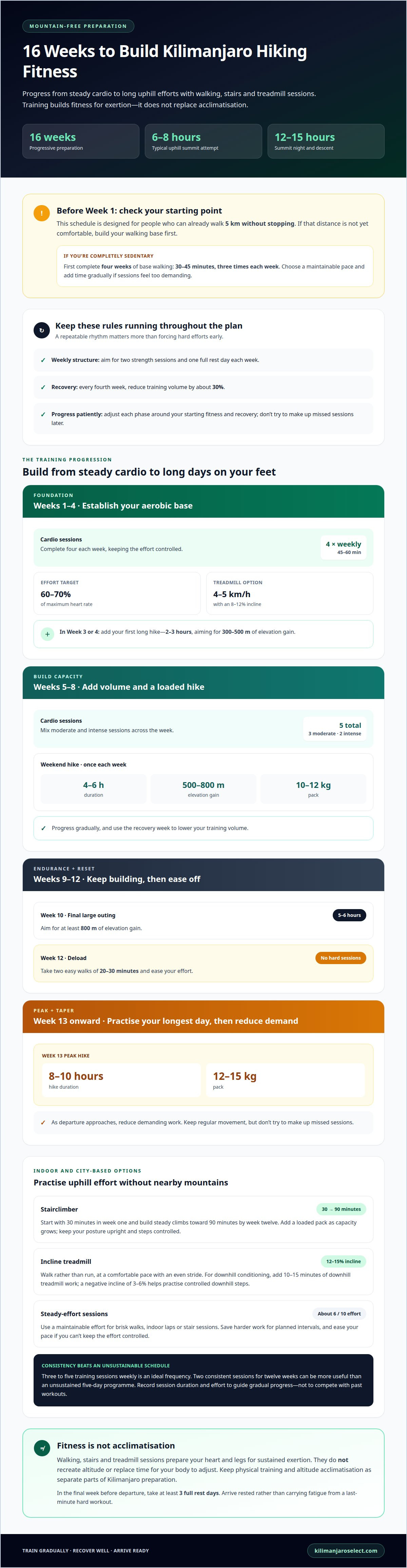
16-Week progressive Kilimanjaro training schedule
Use 16 weeks to build capacity in stages, rather than forcing hard efforts early. Adjust each phase around your starting fitness and recovery.
- Set a steady weekly structure. Aim for two strength sessions and one full rest day each week. Every fourth week, reduce training volume by about 30% for recovery. The schedule is designed for people who can already walk 5 km without stopping. If that distance is not yet comfortable, build your walking base before starting the plan.
- During Weeks 1-4, complete four cardio sessions weekly, each lasting 45-60 minutes at 60-70% of maximum heart rate. On a treadmill, walk at 4-5 km/h with an 8-12% incline. In Week 3 or 4, add a first long hike lasting 2-3 hours, aiming for 300-500 m of elevation gain. Keep the effort controlled.
- For Weeks 5-8, schedule five cardio sessions: three moderate and two intense. Add a weekly weekend hike lasting 4-6 hours, with 500-800 m of elevation gain and a 10-12 kg pack. Progress gradually, and use the recovery week to lower volume. During Weeks 9-12, keep building endurance, but make Week 10’s hike your final large outing: 5-6 hours with at least 800 m of gain.
- Use Week 12 to ease effort with two easy walks of 20-30 minutes and no hard sessions. Week 13 is the peak: plan an 8-10-hour hike with a 12-15 kg pack. Then reduce demanding work as departure approaches, keeping regular movement without trying to make up missed sessions. For route planning alongside your training, explore the 8-day Lemosho Route trek.
Aerobic conditioning without mountain access
Build aerobic fitness with repeatable sessions on level ground, stairs, or a treadmill. These workouts develop cardiovascular endurance, but they do not reproduce altitude.
- If you’re completely sedentary, begin with four weeks of base walking. Walk for 30-45 minutes, three times each week, before Month 1 of the plan. Choose a pace you can maintain throughout each outing. Add time gradually if the sessions feel too demanding, rather than rushing into longer workouts.
- Keep most sessions near 6 out of 10 in effort. This steady intensity lets you practise sustained movement without making every workout a hard effort. Use it for brisk walks, indoor laps, or stair sessions. Save harder work for planned intervals, and ease your pace if you can’t maintain a controlled effort.
- Use a stairclimber to practise continuous climbing when hills aren’t nearby. Start with 30 minutes in week one, then build steady climbs toward 90 minutes by week twelve. Add a loaded pack as your capacity grows, keeping your posture upright and steps controlled. Reduce the duration if your form begins to break down.
- Walk, rather than run, on a treadmill set to a 12-15% incline. Use a comfortable pace and focus on an even stride. For descent conditioning, add 10-15 minutes of downhill treadmill work during cardio sessions. A negative incline of 3-6% can help you practise controlled downhill steps.
- Choose a routine you can sustain throughout the week. Three to five training sessions weekly is an ideal frequency, while two consistent sessions for twelve weeks can be more useful than an unsustained five-day programme. Record each session’s duration and effort. Use the notes to progress gradually, not to compete with past workouts.
Cardiovascular training when mountain access is unavailable
- Choose cardio that keeps you moving steadily. Walking, stair climbing, and treadmill sessions can build cardiovascular fitness for sustained effort. These workouts help prepare your heart and lungs for exertion at lower oxygen levels, but they don’t recreate altitude or acclimatise you. Treat fitness and altitude adjustment as separate parts of Kilimanjaro preparation.
- Use a stair climber when outdoor hills aren’t practical. Begin with 30 minutes, then gradually extend sessions toward 90 minutes. Once steady climbing feels manageable, add a loaded pack and keep your steps controlled. Pay attention to posture as fatigue builds. If you start leaning heavily on the handrails, reduce the pace or pack load.
- Set a treadmill incline between 12-15% and walk, rather than run. A walking pace lets you practise a sustained uphill rhythm without turning the session into a running workout. Keep your stride comfortable and avoid gripping the rails throughout. The aim is controlled climbing effort you can repeat consistently.
- Give each cardio session a clear purpose. Use one for steady incline walking, another for continuous stair climbing, and a third for an easy recovery walk. This variety helps you practise sustained movement without a mountain. Increase duration or resistance gradually, not both at once.
- Track how each session feels, including your breathing, pace, and recovery afterward. If a stair session leaves you struggling to complete the next workout, ease the intensity before progressing. Consistency matters more than occasional exhausting efforts. Use your training notes to shape a realistic approach to your trek, then plan your Kilimanjaro trek around the route that suits your preparation.
Kilimanjaro Select: 7 Days Machame Route Kilimanjaro Treks
Kilimanjaro Select offers the 7 Days Machame Route Kilimanjaro Treks for travellers ready to turn training into a mountain plan. Compare it with the 8 Days Lemosho Route Kilimanjaro Treks, which allows more acclimatisation time, or the 6 Days Marangu Route Kilimanjaro Treks. Route duration matters: fitness work builds stamina, while time on the mountain supports acclimatisation. Consider your preparation and preferred trek length as you decide which itinerary suits your Kilimanjaro plans.
Once you’re ready to plan your trek, visit Kilimanjaro Select.
Turn your preparation into a thoughtful trek plan
Training is more useful when it connects to a clear mountain plan. An altitude training plan for Kilimanjaro without mountain access can help you build a steady routine. Next, match your preparation to the trek you want: consider how you handle long days on your feet, what pace feels sustainable, and how much time you want for the journey.
Keep your training notes handy as you plan. They can help you describe your experience and priorities when discussing a route, including the balance you want between challenge and time for acclimatisation. Kilimanjaro Select offers treks on the Machame, Lemosho, and Marangu routes to consider as you shape your plans.
For a welcoming conversation about your Kilimanjaro plans, contact Kilimanjaro Select. Every steady training walk is a step toward the mountain, and your preparation can begin wherever you are.
Frequently Asked Questions
What If You Don’t Have Hills Nearby?
Practise uphill effort on stairs or a treadmill, then build time on your feet with walks on level ground. Choose a repeatable route, keep a steady pace, and notice how your breathing changes as effort rises. For a simple session, alternate stair climbing with easy walking until you can move steadily without rushing or leaning heavily on the handrail.
What is the best altitude training plan for Kilimanjaro without access to mountains?
The best altitude training plan for Kilimanjaro without mountain access combines regular aerobic exercise, leg strength, longer walks, and recovery. It prepares you for physical effort, not for acclimatisation on the mountain. Keep a simple training log with the activity, duration, and how you felt afterward. Increase one demand at a time, such as duration or incline, to keep progress manageable.
Can stair climbing or treadmill incline workouts prepare you for Kilimanjaro?
Yes, both can train you for sustained uphill movement. Stairs provide repeated climbing, while an inclined treadmill lets you maintain a consistent walking rhythm indoors. Use either to practise steady effort rather than sprinting. Neither reproduces high-altitude conditions, so treat them as fitness work. If stairs irritate your knees, choose controlled treadmill walking and reduce the incline if discomfort appears.
How many weeks should you train before a Kilimanjaro climb?
A 16-week programme is a useful structure for building fitness progressively. Your starting point matters: someone already walking comfortably can begin with the plan, while a sedentary person can first establish a walking routine. If you’re returning from injury or starting with low fitness, allow more preparation time and progress carefully. The key is to arrive able to manage sustained activity, not to cram missed workouts.
What aerobic fitness and strength workouts help most for Kilimanjaro?
Brisk walking, stair climbing, cycling, and incline treadmill walking can all develop aerobic endurance. For strength, practise step-ups, controlled squats, calf raises, and exercises that steady your trunk. Use a stair or stable platform for step-ups, focusing on smooth movement rather than speed. These exercises target the repeated leg effort of trekking and help you maintain balance under a daypack.

