
The shorter route isn’t automatically the better fit. In the Lemosho Route vs. Machame Route decision, schedule is a clear starting point: Kilimanjaro Select offers an 8-day Lemosho trek and a 7-day Machame trek. Lemosho allows more time on the mountain, while Machame suits climbers working with a tighter itinerary.
Both routes lead through striking landscapes toward Uhuru Peak, but differ in their early trail, pace, and crowd levels. Weigh those details against the time you can set aside and the experience you want, rather than choosing by route name alone.
This comparison covers how Lemosho and Machame differ in itinerary, acclimatisation, scenery, wildlife, and crowds, as well as the factors that affect cost. Use it to decide whether a longer, more gradual climb or a shorter itinerary with a livelier trail atmosphere better suits your priorities.
Key Takeaways
- Use acclimatisation pace and time on the mountain to judge which climb better matches your comfort and schedule.
- Compare the budget by considering how itinerary length and route logistics shape the overall trek cost.
- Weigh the quieter early approach and changing landscapes against the busier trail experience as routes come together.
- Use the route comparison to narrow your choice, then explore the trek itinerary that fits your priorities.
Lemosho vs Machame Routes: Which Should You Choose?
Both routes share key high-altitude sections, but differ in their early ascent and itinerary length. Compare the daily schedule, acclimatisation profile, summit logistics, and park charges before choosing.
Lemosho and Machame Altitude Profiles
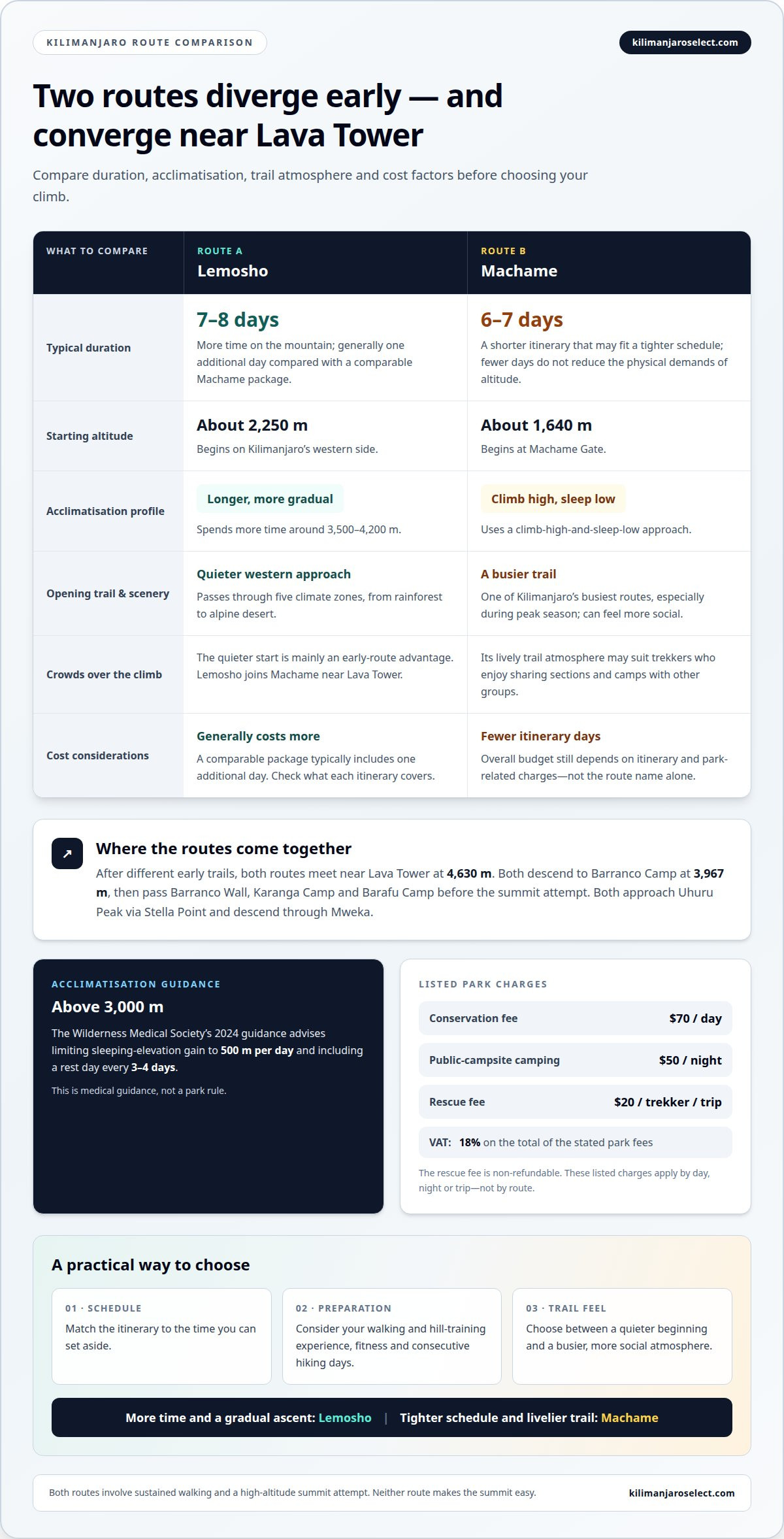
Lemosho begins on Kilimanjaro’s western side at about 2,250 m and spends more time around 3,500-4,200 m, creating a longer, more gradual acclimatisation profile. Machame begins at about 1,640 m and uses a climb-high-and-sleep-low approach. Both routes reach Lava Tower at 4,630 m before descending to Barranco Camp at 3,967 m. The Wilderness Medical Society’s 2024 guidance advises climbers above 3,000 metres to limit sleeping-elevation gain to 500 metres per day and include a rest day every three to four days.
Lemosho and Machame Summit and Descent Routes
Lemosho and Machame follow different early trails, then converge near Lava Tower. From there, both pass Barranco Wall, Karanga Camp, and Barafu Camp before the summit attempt. Climbers approach Uhuru Peak via Stella Point and descend through Mweka on either route. Itineraries can vary: Machame commonly takes 6-7 days, while Lemosho usually takes 7 to 8 days, allowing different amounts of time for the ascent.
Lemosho and Machame Permits and Fees
The listed park charges apply by day, night, or trip rather than by route: the conservation fee is $70 per day inside the park, and public-campsite camping is $50 per night. The rescue fee is $20 per trekker per trip and is non-refundable. VAT is 18 per cent on the total of the stated park fees. These charges don’t provide a route-specific permit procedure; the acclimatisation advice above is medical guidance, not a park rule.
| Route | Starting point | Typical duration | Acclimatisation profile |
|---|---|---|---|
| Lemosho | Western side, about 2,250 m | 7 to 8 days | Longer, gradual profile |
| Machame | Machame Gate, about 1,640 m | 6-7 days | Climb high, sleep low |
Choose Lemosho for a longer ascent with more time on the mountain. Choose Machame if a shorter itinerary better fits your schedule.
Choosing a route by budget, schedule, and experience
Neither route has a distinct best season in this comparison, so plan around your travel dates and the itinerary you prefer. The Lemosho Route vs Machame Route decision becomes clearer when you compare days on the mountain, cost factors, and the trekking pace you want.
Lemosho and Machame Budget and Schedule Fit
Machame typically takes 6-7 days, while Lemosho usually takes 7 to 8 days. Lemosho generally costs more than a comparable Machame package because it typically takes one additional day. The overall budget also depends on itinerary and park-related charges, so compare what each plan covers rather than relying on the route name alone.
Schedule and fitness go hand in hand. Both climbs involve sustained walking and a high-altitude summit attempt, but Lemosho’s longer itinerary allows more time for a gradual ascent. Machame fits the climb into fewer days. A shorter plan may suit limited leave, but it does not lessen the physical demands of trekking at altitude. Consider your preparation and the pace you can maintain over consecutive trail days.
Lemosho and Machame for First-Time Climbers
For a first Kilimanjaro climb, compare the daily itinerary, not just the total duration. Lemosho may suit beginners who prefer more time on the trail, while Machame may suit those with a tighter schedule and preparation for consecutive hiking days. Neither route makes the summit attempt easy, so factor in your experience and fitness.
Make the decision in practical steps: match the itinerary to your available leave, assess your walking and hill-training experience, then choose the pace that feels manageable. The Lemosho Route vs Machame Route comparison is most useful when those personal priorities guide your choice, rather than the shorter duration alone. The changing terrain, including alpine desert, is part of either mountain trek. A Kilimanjaro trek planning overview can help you consider the itinerary differences.
Scenery, wildlife, and early-route crowds
Lemosho is quieter early on; Machame is one of Kilimanjaro’s busiest routes, especially during peak season. The trails meet near Lava Tower, so Lemosho’s quieter start does not last for the whole climb.
Lemosho and Machame Scenery and Wildlife
Lemosho begins on Kilimanjaro’s western side and passes through five climate zones, from rainforest to alpine desert. This varied landscape is a distinctive feature of the western approach. Both routes later share sections near the Shira Plateau and the mountain’s higher terrain.
Wildlife sightings are not a useful deciding factor between these trekking routes. The forest gives way to open high-altitude scenery, and the experience follows the changing landscape rather than a safari itinerary. For a summit-focused climb, compare scenery and trail atmosphere alongside fitness and duration.
Lemosho and Machame Crowds and Trail Atmosphere
Machame is one of Mount Kilimanjaro’s busiest routes and can feel crowded during peak season. Its popularity can also make for a more social trail, with climbers sharing sections and camps. This atmosphere may suit trekkers who enjoy seeing other groups along the ascent.
Lemosho’s western approach offers a quieter start before joining Machame near Lava Tower. After the routes meet, climbers share much of the same trail, so Lemosho’s quieter experience is mainly an early-route advantage. Choose it if a peaceful beginning matters; choose Machame if you prefer a busier, more social climb.
Route comparison and overall recommendation
The right choice depends on how much time you have and what you want from the climb. The Lemosho Route vs Machame Route decision is not about finding a universally better path. It is about matching each route’s opening, pace, and duration to your priorities.
| Route | Approximate distance | Typical duration | May suit you if |
|---|---|---|---|
| Lemosho | 70-71 km | 7-9 days | You want a quieter start and more time on the mountain |
| Machame | 61-62 km | 6-7 days | You prefer a shorter itinerary and a busier trail |
Lemosho’s western approach moves through rainforest, moorland, and alpine desert. The quieter opening can make the early days feel more spacious, while the changing landscapes add variety. This contrast is clearest before the routes join; later, the climbs share much of the same trail.
Machame covers less distance and can fit a tighter schedule, but a shorter itinerary does not make the summit attempt easy. Your preparation, fitness, and response to altitude matter on either route. To compare Lemosho and Machame, review the full day-by-day plan and the time you can set aside, not just the first trail section.
Use this decision guide:
- Choose Lemosho if you can allow more days and value a quieter, scenic opening.
- Choose Machame if a shorter schedule matters and a social trail atmosphere appeals to you.
- Review each itinerary alongside your training, available leave, and preferred pace.
Once your priorities are clear, compare Kilimanjaro trek itineraries to explore a route that fits your plans.
Kilimanjaro Select: 7 Days Machame Route Kilimanjaro Treks
Kilimanjaro Select offers a 7-day Machame trek and an 8-day Lemosho trek, giving you two clear itinerary options after comparing their route profiles. If you value a shorter schedule and don’t mind a busier trail, Machame may fit. If you prefer more time on the mountain and a quieter opening, consider Lemosho.
Use your available days, fitness preparation, and preferred pace to guide the final choice. The 6-day Marangu trek is another Kilimanjaro option if you’re comparing route styles. For time in Tanzania beyond the climb, Kilimanjaro Select also offers a 2-day safari to Tarangire and Ngorongoro Crater.
You’re welcome to contact Kilimanjaro Select to discuss which trek best suits your plans.
Take the next step toward your Kilimanjaro climb
Your route choice is the starting point for planning the kind of climb you want. Think about what you’d like your days on the mountain to feel like, then use those priorities to shape your itinerary. The Lemosho Route vs Machame Route comparison can guide your decision, and Marangu is another route to consider.
Kilimanjaro Select offers 7 Days Machame Route Kilimanjaro Treks, 8 Days Lemosho Route Kilimanjaro Treks, and 6 Days Marangu Route Kilimanjaro Treks. Sharing your preferred route and travel plans can help you explore which trek aligns with your priorities.
Contact Kilimanjaro Select to discuss your Kilimanjaro plans. Your mountain adventure can begin with a thoughtful route choice.
Frequently Asked Questions
Scenic Beauty: Which Route Is More Beautiful?
Beauty is subjective, but Lemosho offers varied landscapes, from rainforest through moorland to alpine desert. The Shira Plateau opens onto broad views, while Machame also reaches striking high-altitude scenery after the routes meet. If you enjoy changing environments throughout a trek, Lemosho may appeal; if you’re drawn to high mountain terrain, both routes offer it.
What about Lemosho’s higher success rates?
Operator-reported 2025 figures place summit success for 8-day Lemosho itineraries at 90-95 per cent, compared with 80-90 per cent for 7-day Machame itineraries. These figures reflect reported outcomes, not a personal forecast. For your own planning, consider the itinerary’s time for acclimatisation, your preparation, and how you feel as the climb gains altitude.
Which One Should You Choose?
Choose based on the experience you want and the time you can dedicate to the climb. A traveler with flexible leave who values a more measured ascent may lean toward Lemosho. Someone with a tighter schedule who enjoys a livelier trail may prefer Machame. Before deciding, compare the itinerary day by day, including summit night and descent, rather than relying on the route name alone.
Which route is right for your epic adventure?
Lemosho may suit you if a quieter start and varied landscapes are central to your adventure. Machame may fit if you enjoy sharing the trail with other climbers and want a more compact itinerary. Consider the moments you value most, from walking through forest to reaching open alpine terrain, and let them guide your choice.
Why does Lemosho cost more?
Lemosho generally costs more than a comparable Machame package because it typically includes an additional day. That can add expenses for park access, camping, crew support, food, and logistics. Compare what each itinerary includes and how its days are arranged, rather than comparing route names alone.
What are the main differences between the Lemosho and Machame routes on Kilimanjaro?
The main differences are the starting approach, itinerary length, and character of the early trail. Lemosho approaches from Kilimanjaro’s western side, while Machame starts at Machame Gate. The routes converge near Lava Tower, so much of the later ascent is shared. Compare route maps and the sequence of daily camps to see how each itinerary shapes the full trek.


