
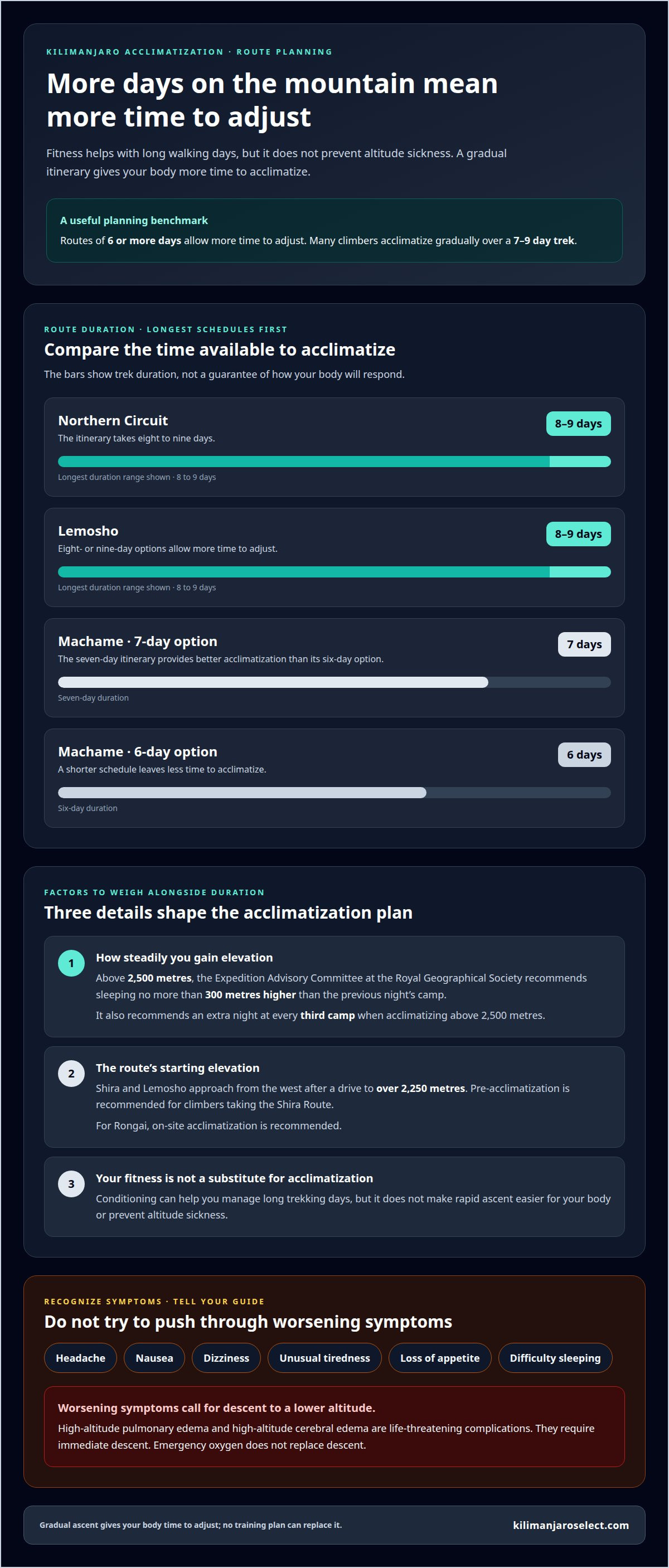
Fitness helps you keep walking, but it doesn’t prevent altitude sickness. The most useful Kilimanjaro acclimatization tips start with a slow pace and enough time on the mountain. Routes of six or more days allow more time to adjust, and many climbers acclimatize gradually over a seven- to nine-day trek. No training plan can replace a gradual ascent.
It’s natural to hope that strong legs and good preparation will make high altitude easier. Fitness can build endurance for long trekking days, but altitude affects people regardless of their conditioning. A steady itinerary, regular sips of water, and enough rest all matter as your body adjusts to thinner air.
This guide explains what fitness can and can’t do, how long acclimatization may take, and practical ways to hydrate on the trail. You’ll also learn why rest days and the “climb high, sleep low” approach can support adjustment, helping you plan your Kilimanjaro trek with a clearer understanding of what may help at altitude.
Key Takeaways
- Build fitness for trekking endurance, but don’t rely on conditioning to prevent altitude sickness; notice symptoms and take changes in how you feel seriously.
- Compare route durations with your acclimatization needs, since a slower itinerary gives your body more time to adjust as you gain elevation.
- Sip water regularly while walking and keep drinking at camp to support hydration throughout the day.
- Use rest days and climb-high, sleep-low outings to gain altitude gradually while giving your body time to recover.
1. Does physical fitness prevent altitude sickness?
No. Good fitness builds endurance for Kilimanjaro’s long walking days, but it doesn’t prevent altitude sickness or ensure successful acclimatization. At 9,000 feet, air pressure is 75% of sea-level pressure; at the 5,895-metre summit, oxygen levels are described as 50% of those at sea level. Your body must adjust to the altitude regardless of training.
Recognize possible symptoms early. Headache, nausea, dizziness, unusual tiredness, loss of appetite, and difficulty sleeping can signal altitude sickness. Tell your guide when symptoms appear or worsen instead of trying to push through. High-altitude pulmonary edema and high-altitude cerebral edema are life-threatening complications of acute mountain sickness. Worsening symptoms call for descent to a lower altitude, and these severe complications require immediate descent.
Keep the itinerary gradual. Above 2,500 metres, the Expedition Advisory Committee at the Royal Geographical Society recommends sleeping no more than 300 metres higher than the previous night’s camp. It also recommends an extra night at every third camp when acclimatizing above 2,500 metres. These steps give your body more time to adjust as the route gains height.
Guides and porters must follow Tanzania National Parks rules on the mountain. For altitude safety, a gradual itinerary and prompt reporting of symptoms remain important. Fitness helps with the physical effort, but it doesn’t replace these precautions.
In a serious altitude emergency involving high-altitude pulmonary edema or high-altitude cerebral edema, the stated response is immediate descent. These complications are life-threatening, so don’t put a summit attempt ahead of responding to worsening symptoms. Emergency oxygen does not replace descent to a lower altitude.
Food also supports the effort. At high altitude, climbers may burn more than 70% of their calories from carbohydrate intake while trekking. Eat regularly, even if your appetite dips, and drink often to stay hydrated. For example, choose an available carbohydrate-rich meal at camp and keep snacks accessible during the day.
2. How long does it take to acclimatize on Kilimanjaro?
Most climbers adjust gradually during a seven- to nine-day Kilimanjaro trek. Routes of six or more days allow more time to acclimatize than shorter itineraries. Choose by considering both your walking fitness and how steadily the route gains altitude. Good fitness can help you manage long days, but it doesn’t make it easier for your body to adjust to a rapid ascent.
The Machame Route has six- and seven-day options, with the seven-day itinerary providing better acclimatization. Lemosho can be climbed over eight or nine days to allow more time to adjust. The Northern Circuit takes eight to nine days. Longer routes spread the climb over more days, so consider them if a slower schedule suits your energy and available time. Eating regularly also helps maintain energy during extended trekking days.
Shira and Lemosho approach Kilimanjaro from the west after a drive to over 2,250 metres. This high starting elevation matters when weighing the route against your experience at altitude. Pre-acclimatization is recommended for climbers taking the Shira Route. Rongai approaches from another side of the mountain, and on-site acclimatization is recommended on this route.
Diamox, the brand name for acetazolamide, may be used to help prevent altitude sickness. A suggested dose is 125-250 mg twice daily, starting one day before the trek; consult a doctor before taking it. The right medication plan depends on personal health and medical advice, not walking fitness alone.
When choosing a route, compare its duration, starting elevation, and opportunities to gain altitude gradually. A six-day option may suit a different schedule than an eight-day climb, but a shorter trip leaves less time to acclimatize. Kilimanjaro’s routes take different approaches, so choose one that balances your available days with the time your body needs to adjust.
3. Hydration during the climb
Plan for roughly 3 to 4 litres of water per day on Kilimanjaro, adjusting your intake to the day’s effort and conditions. Aim for at least 3 litres during the trekking day, then drink more at camp if you remain thirsty. Sip every few minutes while hiking instead of waiting until you feel parched. Regular drinking helps prevent dehydration from adding to the strain of altitude.
Keep water within easy reach. A bottle or hydration bladder in your daypack makes frequent small sips easier than stopping to unpack. For example, drink during each short rest and before setting off again. Check your supply as you go, so you can pace your intake instead of reaching camp with most of your water untouched.
Water supports your climb, but it doesn’t replace gradual acclimatization or treat altitude sickness. As you gain elevation, less oxygen is available, so pay attention to how you feel while walking and sleeping. If headache, nausea, or unusual fatigue appears, tell your guide. Drinking extra water alone is not a response to worsening symptoms.
Pair fluids with regular meals and snacks. Pack familiar foods that are easy to eat on the trail, and have a proper meal at camp even if a long hiking day has dulled your appetite. A small snack during a slow, steady walk can help maintain your energy. Avoid alcohol on the climb, as it can interfere with rest and make it harder to keep up your routine of drinking and eating.
Follow a simple rhythm: drink before departure, sip throughout the day, and replenish at camp. During summit night, cold and tiredness can make it easy to forget your bottle, so keep it accessible and sip regularly. Hydration supports your effort, but no water target guarantees a successful summit or removes the need to report symptoms promptly.
4. Rest days and climb-high-sleep-low acclimatisation
Give your body time on the mountain: most climbers acclimatize gradually during a seven- to nine-day Kilimanjaro trek. A seven- to eight-day itinerary allows more time to adjust than a short climb, while an extra day may suit trekkers concerned about altitude or with limited high-altitude experience. Rest days support recovery, but they don’t replace a gradual ascent.
Walk pole pole, the familiar Swahili instruction to go slowly, and take breaks before fatigue builds. At elevations above 2,500 metres, the Expedition Advisory Committee at the Royal Geographical Society recommends sleeping no more than 300 metres above the previous night’s camp. It also recommends an extra night at every third camp. These steps help pace altitude gain.
“Climb high, sleep low” means hiking to a higher elevation during the day, then returning to a lower camp to sleep. On the Lemosho Route, climbers ascend to Lava Tower at 4,600 metres, then sleep at Barranco Camp at 3,950 metres. Such an outing introduces the body to higher altitude while keeping the night’s sleeping elevation lower.
Climbing Mount Meru before Kilimanjaro is another way trekkers consider spending time at altitude. Meru rises to 4,566 metres, but a separate mountain climb doesn’t replace the gradual acclimatization needed on Kilimanjaro. Plan recovery between treks and pay attention to symptoms during each ascent.
Climbing costs depend on factors such as route duration and what the arrangements include; a price is provided after a quote request. A portable toilet is an optional item trekkers may consider for comfort on the mountain, with the cost depending on the arrangement. Prioritize a suitable itinerary and steady pace before optional extras. Rest and a slow ascent support adjustment, but don’t prevent every altitude problem.
Kilimanjaro Select: 7 Days Machame Route Kilimanjaro Treks
Kilimanjaro Select offers a 7 Days Machame Route Kilimanjaro Trek for trekkers planning a week on the mountain. If you want a longer itinerary with more time for gradual acclimatization, the 8 Days Lemosho Route Kilimanjaro Trek is another option. The 6 Days Marangu Route Kilimanjaro Trek may suit a tighter schedule, though it allows less time than the longer choices.
Consider how much time you can spend trekking, how comfortable you are with altitude, and whether a slower climb better suits your needs. Comparing route durations can turn general acclimatization advice into a practical Kilimanjaro plan.
For help exploring these trek options, contact Kilimanjaro Select.
Shape a climb that suits your journey
Let your Kilimanjaro plan reflect more than a summit goal. Consider how you prefer to travel, how much time you can set aside, and what pace will help you stay present on the trail. These choices can make preparation a thoughtful journey through Tanzania’s changing mountain landscapes.
Use these Kilimanjaro acclimatization tips as a starting point, then focus on the itinerary that suits your available time and trekking experience. Kilimanjaro Select offers Machame, Lemosho, and Marangu treks with different durations to consider. Discussing your preferred route is a practical next step.
Contact Kilimanjaro Select to plan your climb, and begin looking forward to the mountain with care, patience, and a spirit of discovery.
Frequently Asked Questions
Does physical fitness prevent altitude sickness?
No. Physical training can make long approaches feel more manageable, but it can’t predict how your body will respond to altitude. Treat a sudden change in energy, balance, breathing, or alertness as a reason to pause and tell your guide. Fit trekkers should follow the same symptom-reporting habits as anyone else, rather than treating strength as protection.
How Many Extra Acclimatization Days Should You Add?
An additional day can be a practical option if you’re concerned about altitude or have limited high-altitude experience. Among useful Kilimanjaro acclimatization tips, consider the route’s elevation profile, the sequence of overnight camps, and how you feel during the approach. A rest day is most useful when it supports gradual adjustment within the itinerary, rather than being added without considering how the climb progresses.
How long does it take to acclimatize on Kilimanjaro?
Most climbers adjust gradually over a seven- to nine-day trek. Acclimatization develops as the route gains elevation, so consider the itinerary as well as its total duration. A longer schedule may allow gentler progression and recovery, although people adjust at different rates. Think of acclimatization as a process across the climb, not a single overnight change.
Can anyone acclimatize to high altitude?
No one can assume their body will adjust like another trekker’s. People of different ages have climbed Kilimanjaro, but that doesn’t predict how you’ll feel at altitude. Practical Kilimanjaro acclimatization tips start with following a gradual itinerary, communicating changes promptly, and taking symptoms seriously. Your response during the trek matters more than assumptions based on age or athletic ability.
How Hard Is It to Climb Mount Kilimanjaro?
Climbing Mount Kilimanjaro is physically demanding because it involves sustained walking over uneven terrain, with colder conditions and less available oxygen at higher elevations. Prepare for consecutive days on your feet, and expect your pace to slow as you climb. Previous trekking experience can help you manage trail routines, but it can’t prevent the effects of altitude.
How Long Does It Take to Summit Kilimanjaro?
Most Kilimanjaro itineraries take six to eight days, although shorter climbs are available. The summit attempt is one part of the schedule, and time on summit day varies with the route, pace, conditions, and group progress. Plan around the full itinerary rather than viewing the summit as a standalone walk, because the approach and descent are also part of the climb.


